
Escher-Loop: Mutual Evolution by Closed-Loop Self-Referential Optimization
arXiv cs.AI / 4/28/2026
📰 NewsIdeas & Deep AnalysisModels & Research
Key Points
- The paper introduces “Escher-Loop,” a fully closed-loop framework where Task Agents and Optimizer Agents mutually evolve to enable open-ended improvement beyond manually scripted agent workflows.
- It proposes a dynamic benchmarking method that reuses empirical win/loss signals from newly generated Task Agents to update and refine the optimizers with minimal overhead.
- Experiments on mathematical optimization problems show that Escher-Loop surpasses the performance ceilings of static baselines while achieving the highest absolute peak performance under matched compute.
- The results indicate that Optimizer Agents can dynamically adapt their strategies to changing requirements imposed by increasingly strong Task Agents, improving performance especially in later stages.
- Overall, the work suggests a self-referential evaluation-and-refinement loop can continuously drive better agent behavior without needing separate, costly evaluation pipelines.
Related Articles

Big Tech firms are accelerating AI investments and integration, while regulators and companies focus on safety and responsible adoption.
Dev.to
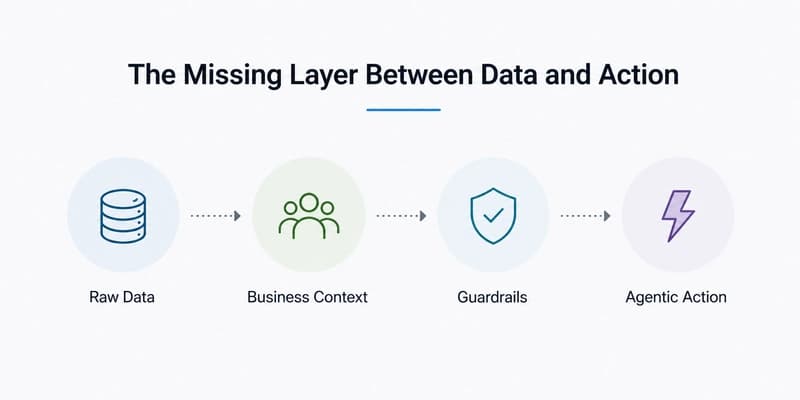
Everyone Wants AI Agents. Fewer Teams Are Ready for the Messy Business Context Behind Them
Dev.to
AI 编程工具对比 2026:Claude Code vs Cursor vs Gemini CLI vs Codex
Dev.to

How I Improved My YouTube Shorts and Podcast Audio Workflow with AI Tools
Dev.to

An improvement of the convergence proof of the ADAM-Optimizer
Dev.to


