
Cross-Modal Visuo-Tactile Object Perception
arXiv cs.RO / 4/3/2026
💬 OpinionIdeas & Deep AnalysisModels & Research
Key Points
- The paper introduces Cross-Modal Latent Filter (CMLF), a method for estimating physical object properties for contact-rich robotic manipulation using both vision and tactile sensing.
- CMLF learns a structured, causal latent state-space of object properties and performs Bayesian inference to update beliefs over time, rather than relying on purely static alignment or forceful fusion.
- It enables bidirectional transfer of priors between vision and touch, helping address uncertainty and difficult-to-model effects like non-rigid deformation and nonlinear contact friction.
- Real-world robotic experiments show improved efficiency and robustness in latent physical property estimation under uncertainty compared with baseline approaches.
- The model also exhibits human-like perceptual coupling phenomena, such as susceptibility to cross-modal illusions and comparable learning trajectories across sensory modalities.
Related Articles

90000 Tech Workers Got Fired This Year and Everyone Is Blaming AI but Thats Not the Whole Story
Dev.to

Microsoft’s $10 Billion Japan Bet Shows the Next AI Battleground Is National Infrastructure
Dev.to
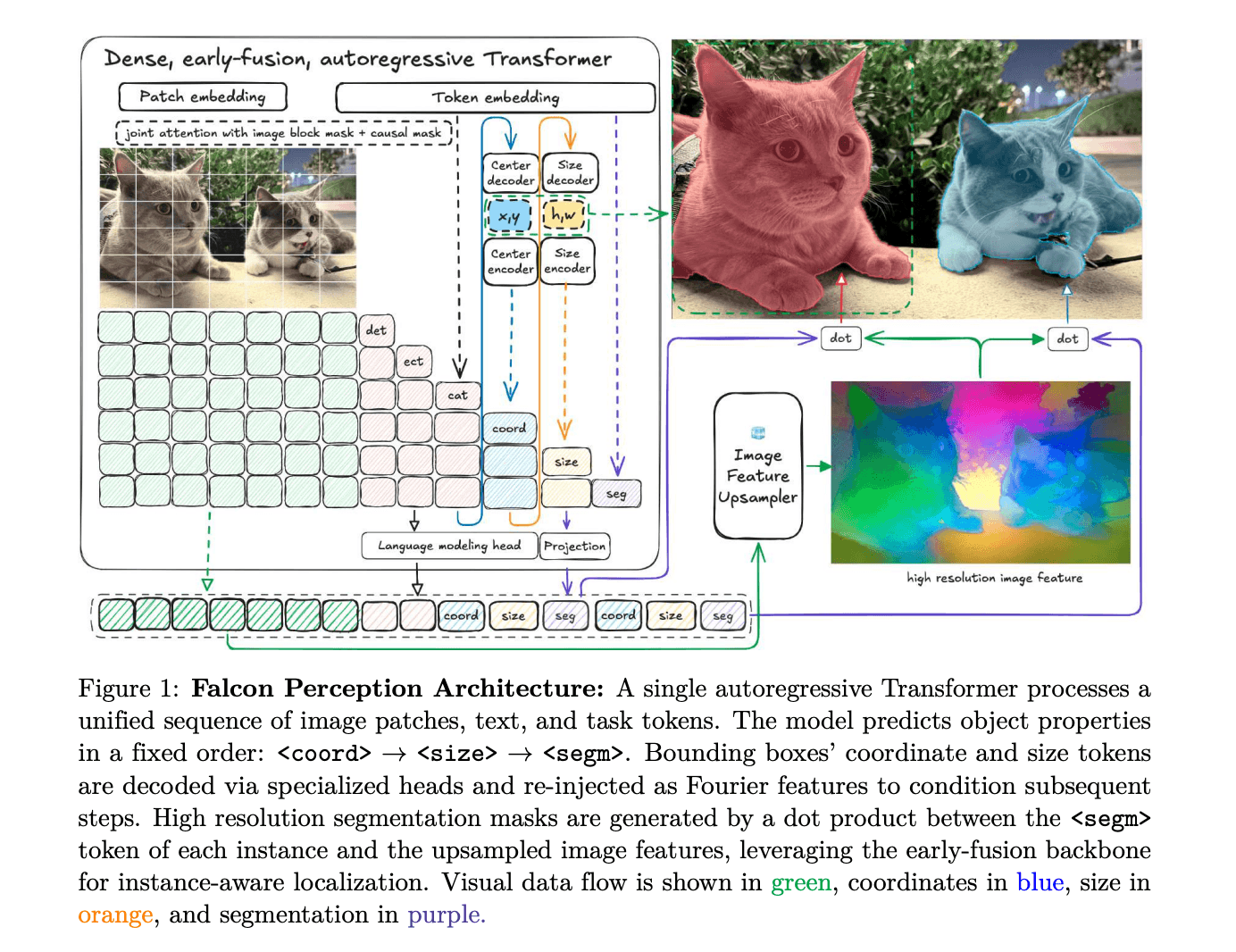
TII Releases Falcon Perception: A 0.6B-Parameter Early-Fusion Transformer for Open-Vocabulary Grounding and Segmentation from Natural Language Prompts
MarkTechPost

The house asked me a question
Dev.to

Precision Clip Selection: How AI Suggests Your In and Out Points
Dev.to


