
Stable Multimodal Graph Unlearning via Feature-Dimension Aware Quantile Selection
arXiv cs.LG / 5/6/2026
📰 NewsIdeas & Deep AnalysisModels & Research
Key Points
- The paper argues that existing graph unlearning methods often use uniform parameter selection/editing across GNN layers, which can be especially damaging for multimodal graphs with high-dimensional cross-modal projections.
- It introduces FDQ (Feature-Dimension Aware Quantile), which detects the layers tied to high-dimensional input projections and applies more conservative, quantile-threshold-based suppression there.
- FDQ keeps the core importance-estimation mechanism unchanged, but integrates with diagonal sensitivity-based parameter importance analysis to support efficient node and edge unlearning.
- Experiments on Ele-Fashion and Goodreads-NC show FDQ preserves utility more effectively while still achieving effective forgetting, including resistance to membership inference attacks.
- The work positions FDQ as a principled, robust approach for privacy-aware unlearning in high-dimensional multimodal graph learning settings.
Related Articles

Top 10 Free AI Tools for Students in 2026: The Ultimate Study Guide
Dev.to

AI as Your Contingency Co-Pilot: Automating Wedding Day 'What-Ifs'
Dev.to
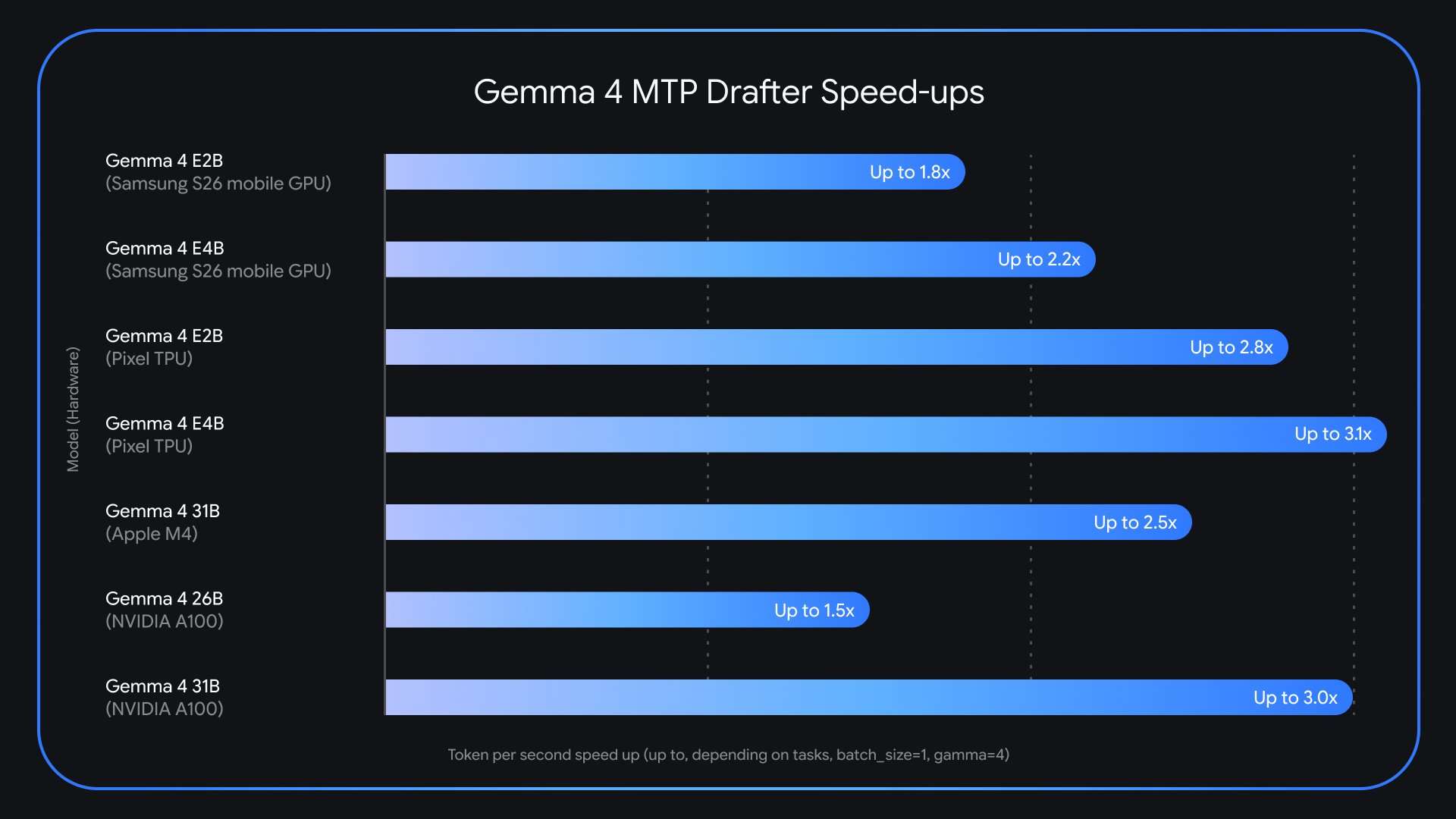
Google AI Releases Multi-Token Prediction (MTP) Drafters for Gemma 4: Delivering Up to 3x Faster Inference Without Quality Loss
MarkTechPost
When Claude Hallucinates in Court: The Latham & Watkins Incident and What It Means for Attorney Liability
MarkTechPost
Solidity LM surpasses Opus
Reddit r/LocalLLaMA


