
Bandits on graphs and structures
arXiv cs.LG / 5/6/2026
💬 OpinionIdeas & Deep AnalysisModels & Research
Key Points
- The thesis focuses on structural properties of sequential decision problems to make solutions more practical for deployment.
- It highlights action spaces representable as graphs, studying graph bandits under reward smoothness (spectral bandits), side observations, and influence maximization.
- It extends to very large structured domains, including kernel bandits and polymatroid bandits, as well as bandits for function optimization with unknown smoothness.
- The work also addresses infinitely many-arms bandits, covering settings where the action space may be exponential or even infinite in size.
- Overall, it is positioned as a survey of the author’s contributions to graph-based and structured bandit problems.
Related Articles

Top 10 Free AI Tools for Students in 2026: The Ultimate Study Guide
Dev.to
AI as Your Contingency Co-Pilot: Automating Wedding Day 'What-Ifs'
Dev.to
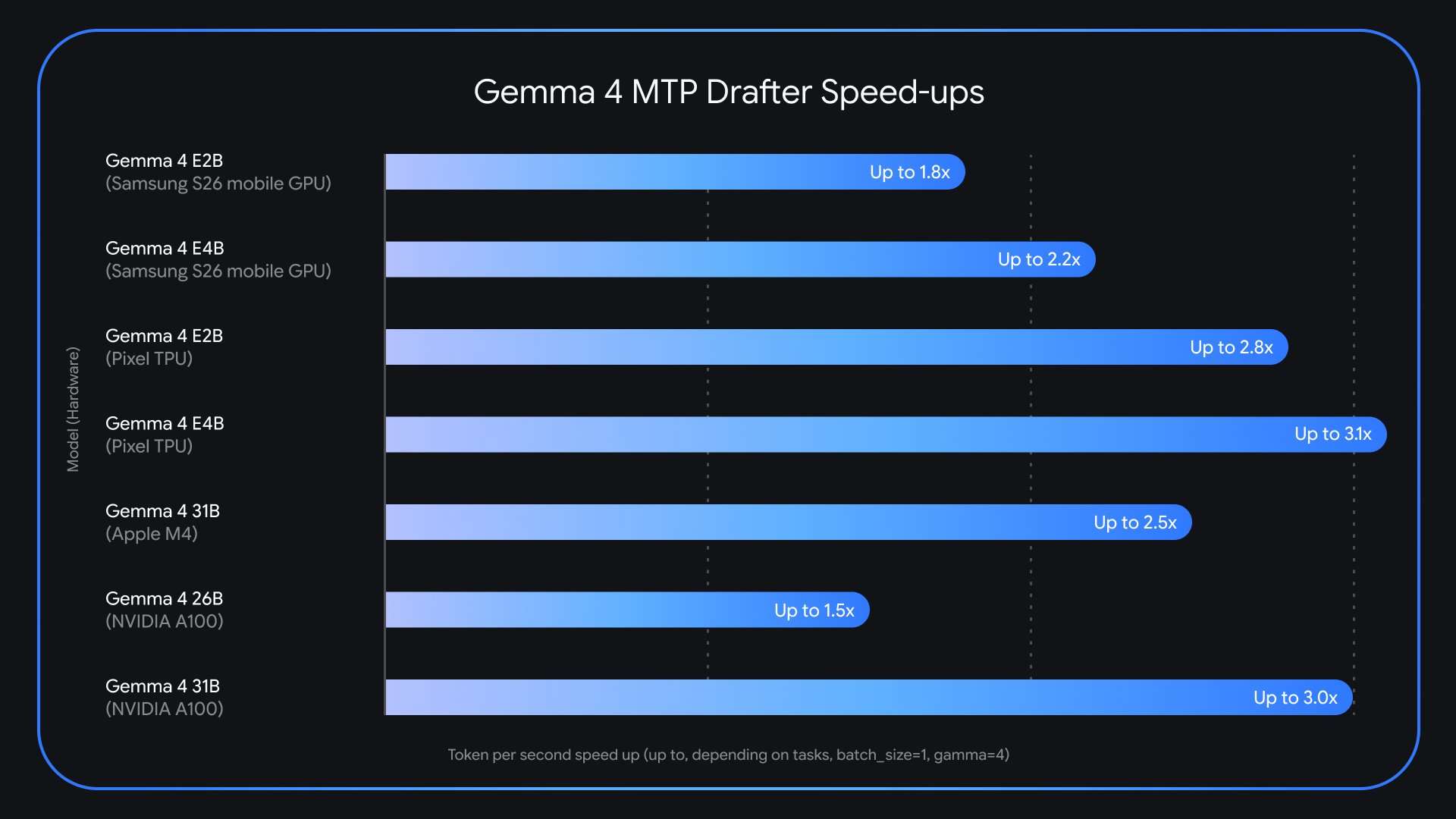
Google AI Releases Multi-Token Prediction (MTP) Drafters for Gemma 4: Delivering Up to 3x Faster Inference Without Quality Loss
MarkTechPost
When Claude Hallucinates in Court: The Latham & Watkins Incident and What It Means for Attorney Liability
MarkTechPost
Solidity LM surpasses Opus
Reddit r/LocalLLaMA


