
NearID: Identity Representation Learning via Near-identity Distractors
arXiv cs.CV / 4/3/2026
💬 OpinionSignals & Early TrendsIdeas & Deep AnalysisModels & Research
Key Points
- The paper argues that standard vision encoders often entangle object identity with background context, causing unreliable evaluations for identity-focused tasks like personalized generation and image editing.
- It proposes a Near-identity (NearID) distractor framework that places semantically similar but different instances onto the exact same background to prevent contextual shortcut learning and isolate identity.
- The authors release the NearID dataset (19K identities and 316K matched-context distractors) along with a strict margin-based SSR evaluation protocol to better measure cross-view identity discrimination.
- Experiments show that off-the-shelf pre-trained encoders can perform poorly (SSR as low as 30.7%), with distractors frequently ranked above true matches, motivating the method.
- Using a two-tier contrastive objective on a frozen backbone, the approach raises SSR to 99.2% and improves part-level discrimination by 28%, with better alignment on the human-aligned DreamBench++ benchmark.
Related Articles

Black Hat Asia
AI Business

90000 Tech Workers Got Fired This Year and Everyone Is Blaming AI but Thats Not the Whole Story
Dev.to

Microsoft’s $10 Billion Japan Bet Shows the Next AI Battleground Is National Infrastructure
Dev.to
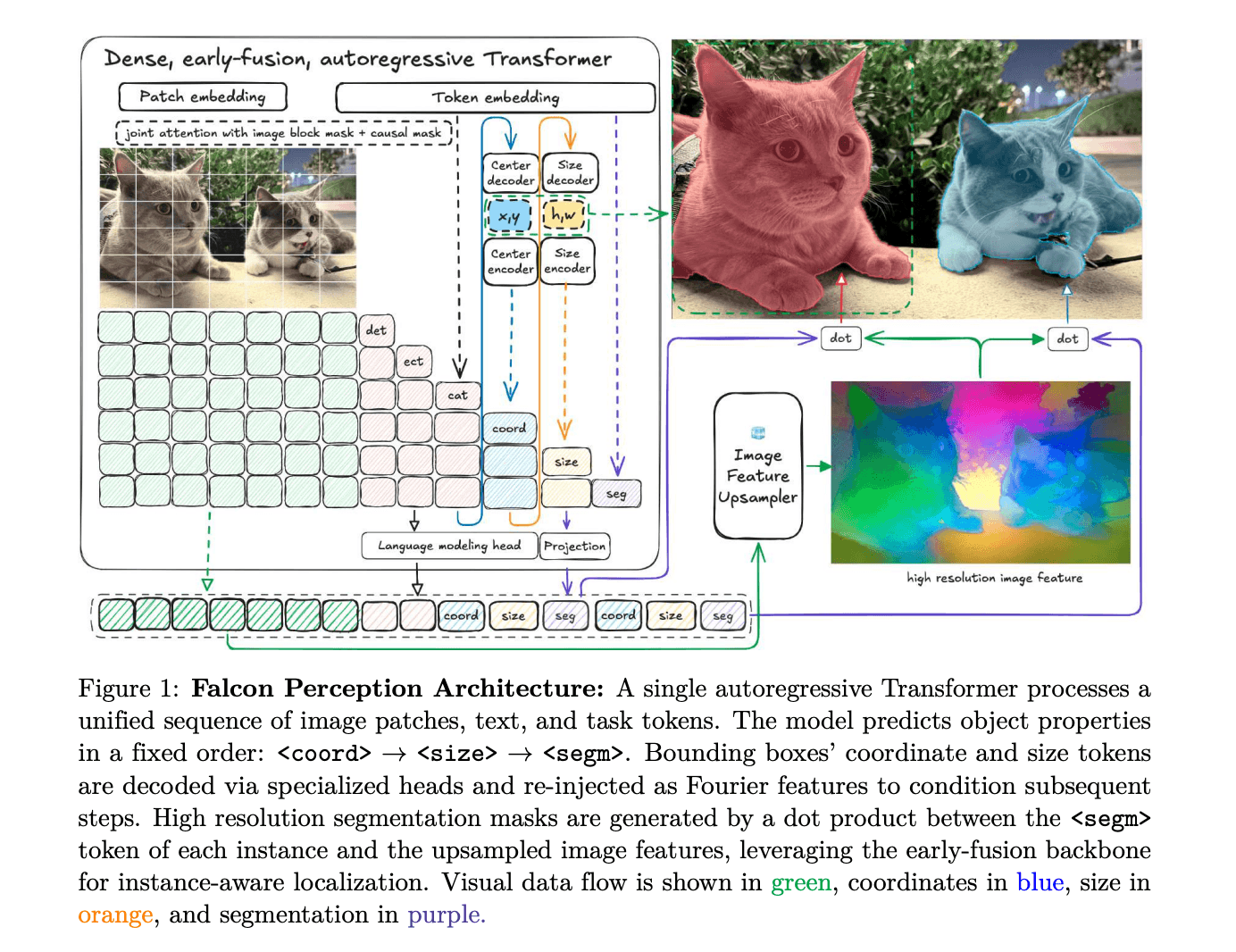
TII Releases Falcon Perception: A 0.6B-Parameter Early-Fusion Transformer for Open-Vocabulary Grounding and Segmentation from Natural Language Prompts
MarkTechPost

Portable eye scanner powered by AI expands access to low-cost community screening
Reddit r/artificial


