
Analysis of Efficient Transmission Methods of Grid Maps for Intelligent Vehicles
arXiv cs.RO / 4/3/2026
💬 OpinionSignals & Early TrendsIdeas & Deep AnalysisModels & Research
Key Points
- The paper analyzes why grid-map representations for autonomous vehicles are data-intensive and how this limits distributed processing and V2X use cases due to large transmission payloads.
- It proposes a patch-based communication pipeline that compresses and transmits grid-map data more efficiently while building on existing patch-based grid-map methods.
- The authors provide a communication-focused analysis for both intra-vehicle links and vehicle-to-everything (V2X) scenarios, rather than only addressing storage or perception-side efficiency.
- The approach is validated using two real-world experimental setups covering the targeted communication contexts.
- The paper concludes with practical guidelines for efficiently transmitting grid-map data in intelligent transportation system deployments.
Related Articles

Black Hat Asia
AI Business

90000 Tech Workers Got Fired This Year and Everyone Is Blaming AI but Thats Not the Whole Story
Dev.to

Microsoft’s $10 Billion Japan Bet Shows the Next AI Battleground Is National Infrastructure
Dev.to
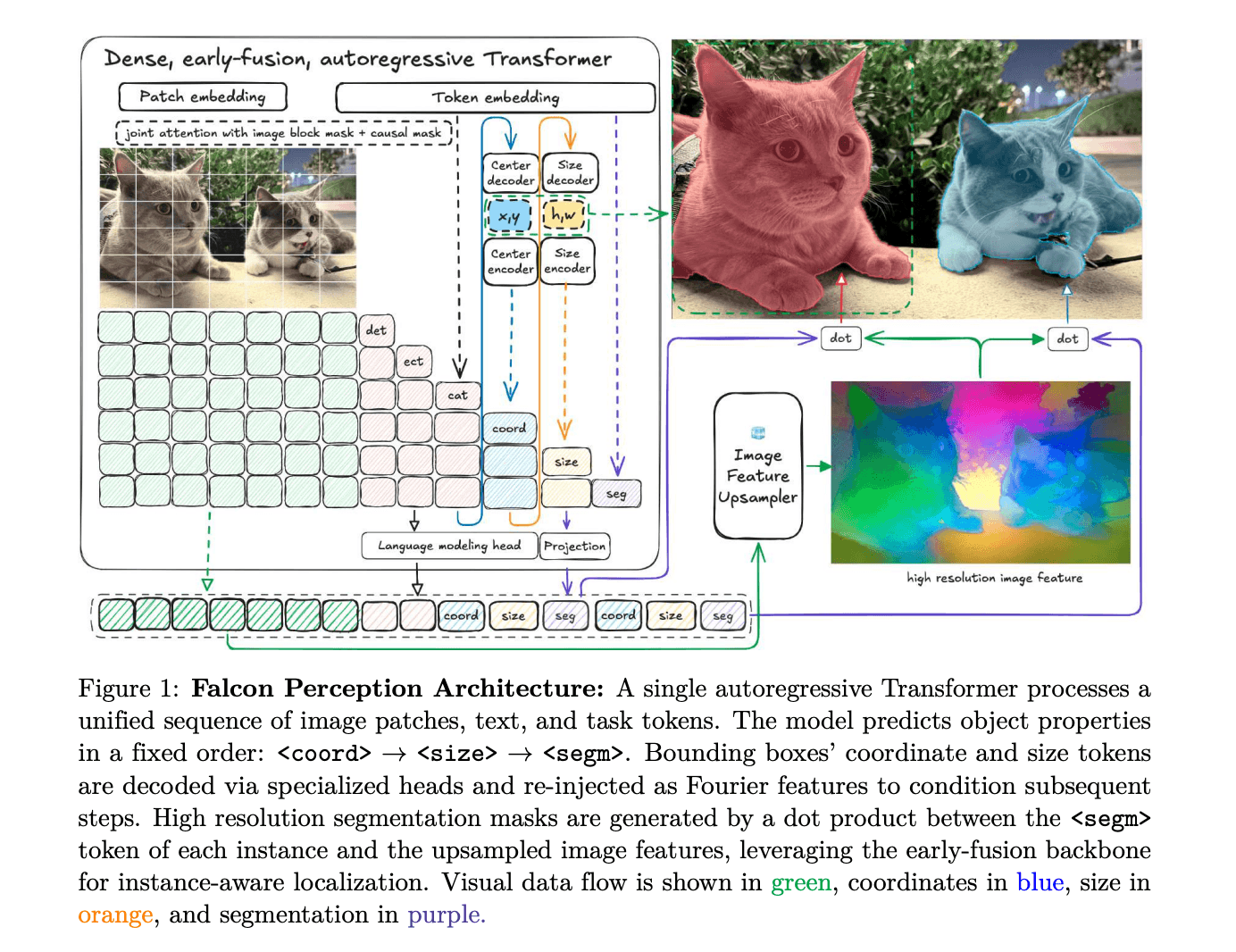
TII Releases Falcon Perception: A 0.6B-Parameter Early-Fusion Transformer for Open-Vocabulary Grounding and Segmentation from Natural Language Prompts
MarkTechPost

Portable eye scanner powered by AI expands access to low-cost community screening
Reddit r/artificial


