
Hessian-informed machine learning interatomic potential towards bridging theory and experiments
arXiv cs.LG / 3/27/2026
📰 NewsSignals & Early TrendsIdeas & Deep AnalysisModels & Research
Key Points
- The paper proposes a Hessian-informed machine learning interatomic potential (Hi-MLIP) designed to capture local curvature of potential energy surfaces that governs certain experimentally relevant observables.
- To enable Hessian supervision without prohibitive cost, the authors introduce Hessian INformed Training (HINT), which combines Hessian pre-training, configuration sampling, curriculum learning, and a stochastic projection Hessian loss to cut expensive Hessian label requirements by 2–4 orders of magnitude.
- Hi-MLIP trained with HINT shows improved transition-state search performance and yields Gibbs free-energy predictions near chemical accuracy, particularly in data-scarce regimes.
- The approach is demonstrated on strongly anharmonic hydrides, where it reproduces phonon renormalization and superconducting critical temperatures in close agreement with experiment while avoiding the usual computational bottleneck of explicit anharmonic calculations.
広告
Related Articles

Got My 39-Agent System Audited Live. Here's What the Maturity Scorecard Revealed.
Dev.to

The Redline Economy
Dev.to

$500 GPU outperforms Claude Sonnet on coding benchmarks
Dev.to

From Scattershot to Sniper: AI for Hyper-Personalized Media Lists
Dev.to
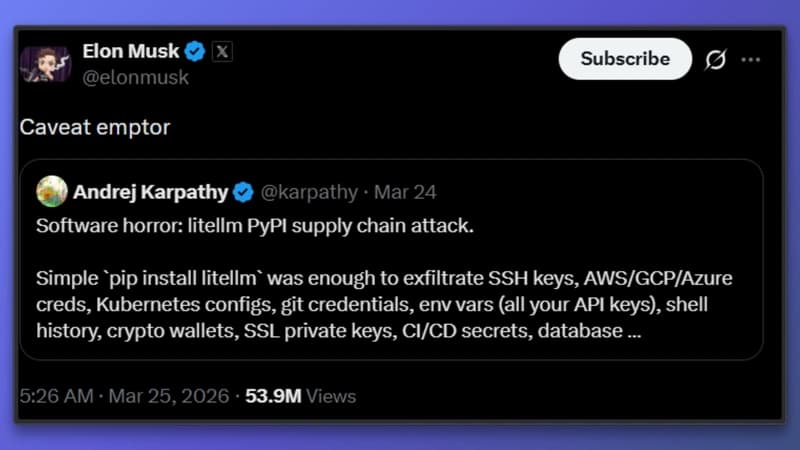
The LiteLLM Supply Chain Attack: A Wake-Up Call for AI Infrastructure
Dev.to


