
CSGuard: Toward Forgery-Resistant Watermarking in Diffusion Models via Compressed Sensing Constraint
arXiv cs.CV / 5/5/2026
📰 NewsModels & Research
Key Points
- Latent-space watermarking for diffusion models can attribute content without extra training, but current schemes are vulnerable to forgery attacks that extract the watermark via inversion and re-generation with arbitrary prompts.
- The paper introduces CSGuard, a forgery-resistant watermarking scheme that uses a compressed sensing constraint tied to a secret matrix to link generation and verification.
- With CSGuard, only users who possess the secret matrix can correctly embed or verify watermarks, making it harder for unauthorized users to forge watermarked content.
- Experiments report a drop in forgery attack success from 100.0% to 28.12%, while maintaining a 100% detection rate for benign watermarked images without degrading watermarking effectiveness.
Related Articles

Why Retail Chargeback Recovery Could Be AgentHansa's First Real PMF
Dev.to
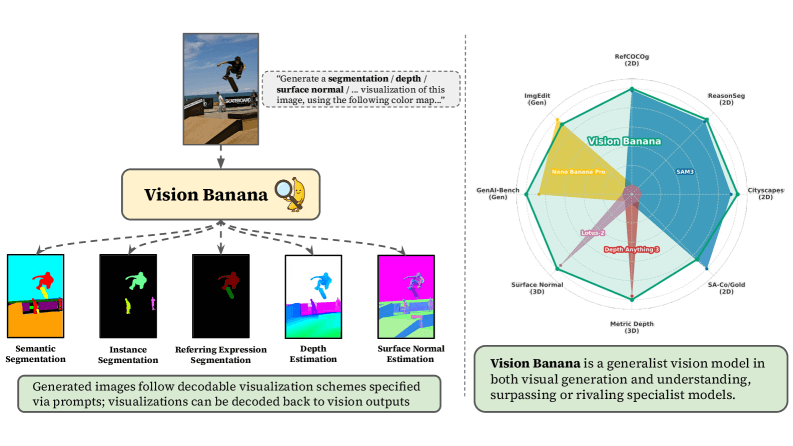
Last Week in AI #340 - OpenAI vs Musk + Microsoft, DeepSeek v4, Vision Banana
Last Week in AI

Trying to train tiny LLMs on length constrained reddit posts summarization task using GRPO on 3xMac Minis - updates!
Reddit r/LocalLLaMA

Uber Shares What Happens When 1.500 AI Agents Hit Production
Reddit r/artificial
vibevoice.cpp: Microsoft VibeVoice (TTS + long-form ASR with diarization) ported to ggml/C++, runs on CPU/CUDA/Metal/Vulkan, no Python at inference
Reddit r/LocalLLaMA


