
The Kerimov-Alekberli Model: An Information-Geometric Framework for Real-Time System Stability
arXiv cs.AI / 4/28/2026
📰 NewsIdeas & Deep AnalysisModels & Research
Key Points
- The paper proposes the Kerimov-Alekberli model, an information-geometric framework that reframes AI safety by linking non-equilibrium thermodynamics to stochastic control for aligning autonomous systems.
- It establishes an isomorphism between non-equilibrium thermodynamics and stochastic control, treating systemic anomalies as deviations from a Riemannian manifold measured using Kullback–Leibler divergence with a Fisher-information-based dynamic threshold.
- Grounding the approach in the Landauer Principle, the study argues that adversarial perturbations can be interpreted as performing measurable physical work by increasing a system’s informational entropy.
- Validation on NSL-KDD and unmanned aerial vehicle trajectory simulations suggests the model can detect issues in real time using an FPT trigger, achieving strong accuracy and low false positive rates on benchmarks.
- Overall, the authors position the framework as a shift from heuristic, rule-based ethical checks toward a physics- and entropy-quantified stability paradigm for AI safety.
Related Articles

Big Tech firms are accelerating AI investments and integration, while regulators and companies focus on safety and responsible adoption.
Dev.to
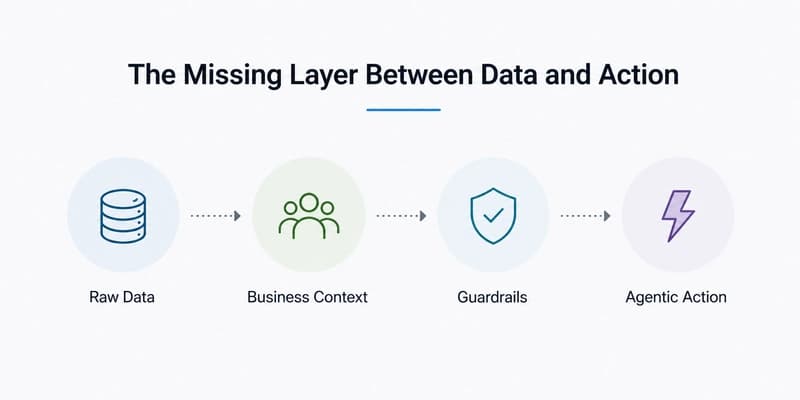
Everyone Wants AI Agents. Fewer Teams Are Ready for the Messy Business Context Behind Them
Dev.to
AI 编程工具对比 2026:Claude Code vs Cursor vs Gemini CLI vs Codex
Dev.to

How I Improved My YouTube Shorts and Podcast Audio Workflow with AI Tools
Dev.to

An improvement of the convergence proof of the ADAM-Optimizer
Dev.to


