
Enhanced 3D Brain Tumor Segmentation Using Assorted Precision Training
arXiv cs.CV / 5/6/2026
📰 NewsModels & Research
Key Points
- The paper presents a state-of-the-art method for early brain tumor identification using 3D medical image segmentation focused on benign vs. malignant tumors.
- It builds on the SegResNet 3D segmentation architecture and trains the model with an automatic multi-precision training approach.
- Model performance is evaluated using Dice loss and Dice metric, reporting an overall Dice score of 0.84.
- The results break down into tumor core (0.84), whole tumor (0.90), and enhancing tumor (0.79) Dice scores, indicating stronger performance for whole-tumor delineation.
- The approach targets practical, accurate 3D segmentation to support survival-critical early detection workflows in clinical contexts.
Related Articles
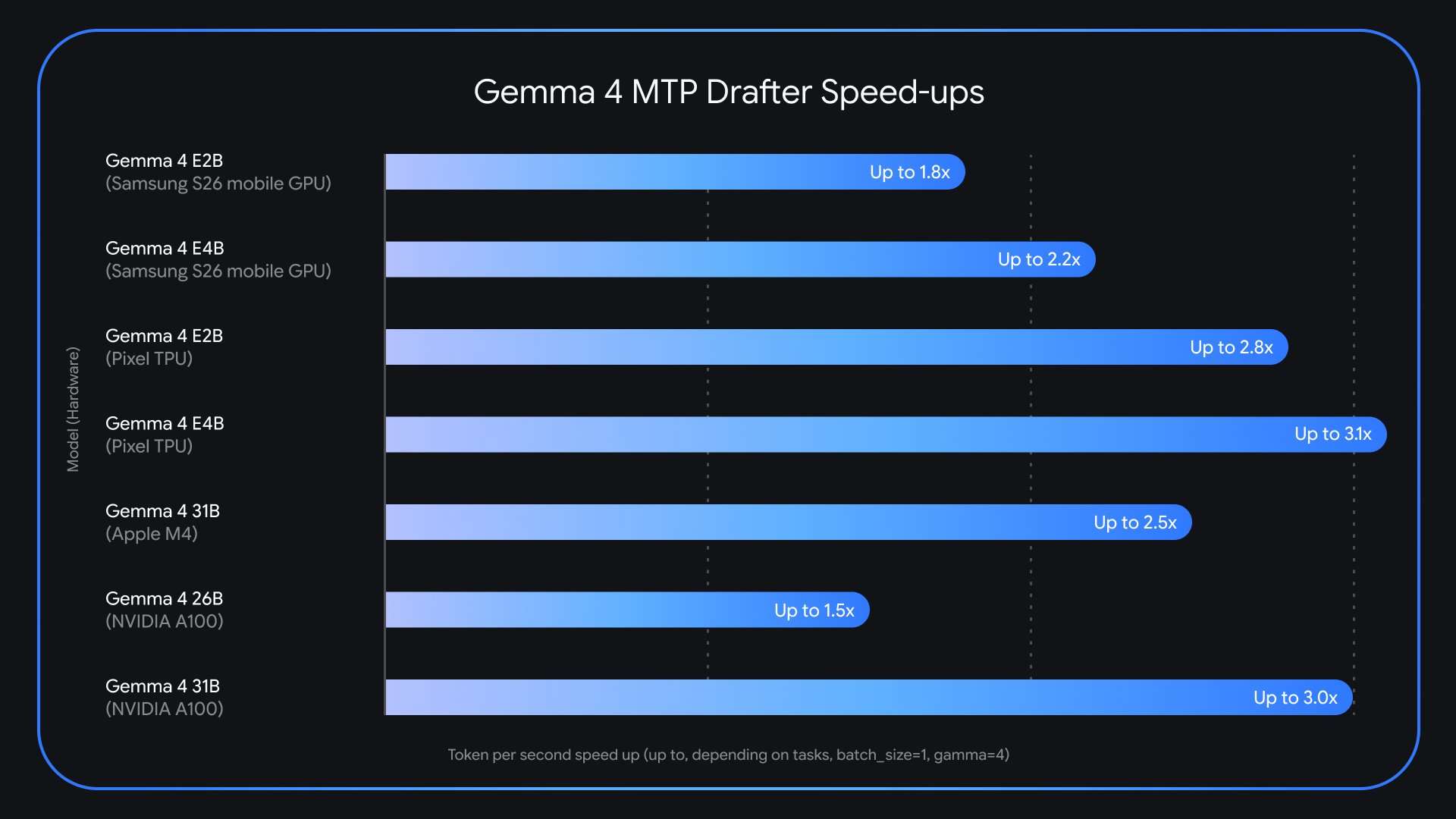
Google AI Releases Multi-Token Prediction (MTP) Drafters for Gemma 4: Delivering Up to 3x Faster Inference Without Quality Loss
MarkTechPost
Solidity LM surpasses Opus
Reddit r/LocalLLaMA

Quality comparison between Qwen 3.6 27B quantizations (BF16, Q8_0, Q6_K, Q5_K_XL, Q4_K_XL, IQ4_XS, IQ3_XXS,...)
Reddit r/LocalLLaMA

We measured the real cost of running a GPT-5.4 chatbot on live websites
Reddit r/artificial

AI ecosystems in China and US grow apart amid tech war
SCMP Tech


