
Partially Observed Structural Causal Models
arXiv cs.LG / 5/6/2026
📰 NewsIdeas & Deep AnalysisModels & Research
Key Points
- The paper introduces Partially Observed Structural Causal Models (POSCMs), extending structural causal models to settings where latent contexts jointly determine both interaction structure and downstream mechanisms on observed variables.
- POSCMs support an intervention hierarchy that includes both node-level and edge-level context/variable interventions, enabling more “surgical” causal edits than standard SCMs.
- The authors use a Kolmogorov-Arnold-Sprecher (KAS) edge-functional decomposition to explicitly parametrize dyadic functional contributions and to represent each node mechanism as a sum of univariate functions of its parents.
- A new identifiability theory specifies which families of interventions are sufficient to separate structure formation effects from mechanism effects, addressing ambiguity that arises when key contexts are latent.
- Empirical validation in a virtual human retina simulator shows (a) predicted non-identifiability when context is fully latent, (b) structure–mechanism confounding when only node interventions are available with latent edges, and (c) recovery of synaptic input–output relationships using targeted node interventions aligned with the proposed positive identifiability result.
Related Articles

Top 10 Free AI Tools for Students in 2026: The Ultimate Study Guide
Dev.to
AI as Your Contingency Co-Pilot: Automating Wedding Day 'What-Ifs'
Dev.to
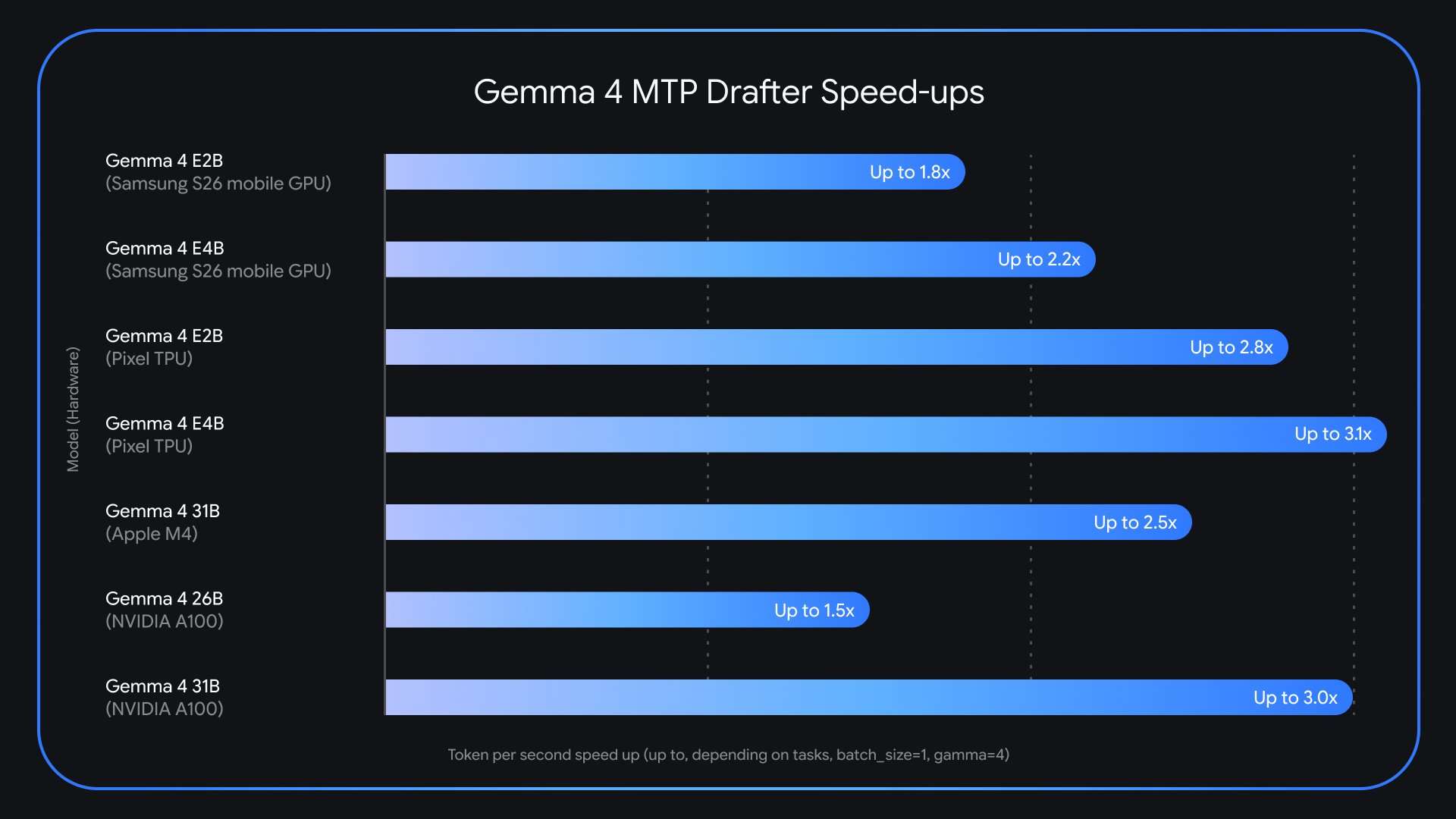
Google AI Releases Multi-Token Prediction (MTP) Drafters for Gemma 4: Delivering Up to 3x Faster Inference Without Quality Loss
MarkTechPost
When Claude Hallucinates in Court: The Latham & Watkins Incident and What It Means for Attorney Liability
MarkTechPost
Solidity LM surpasses Opus
Reddit r/LocalLLaMA


