
FluxFlow: Conservative Flow-Matching for Astronomical Image Super-Resolution
arXiv cs.CV / 5/6/2026
📰 NewsIdeas & Deep AnalysisModels & Research
Key Points
- The paper addresses ground-to-space astronomical image super-resolution, where pixel sampling and atmospheric seeing create a stochastic, spatially varying point-spread function (PSF) that upsampling alone cannot resolve.
- It proposes FluxFlow, a conservative pixel-space flow-matching approach that uses observation uncertainty and source-region importance weighting during training to better reflect real atmospheric statistics.
- FluxFlow includes a training-free, Wiener-regularized test-time correction intended to suppress hallucination artifacts while preserving true recovered detail.
- The authors introduce the DESI–HST Dataset, a benchmark of 19,500 real co-registered ground-to-space image pairs with realistic PSF variation.
- Experiments show FluxFlow improves over existing baselines on both photometric metrics and scientific accuracy, indicating more physically faithful reconstructions.
Related Articles

Top 10 Free AI Tools for Students in 2026: The Ultimate Study Guide
Dev.to

AI as Your Contingency Co-Pilot: Automating Wedding Day 'What-Ifs'
Dev.to
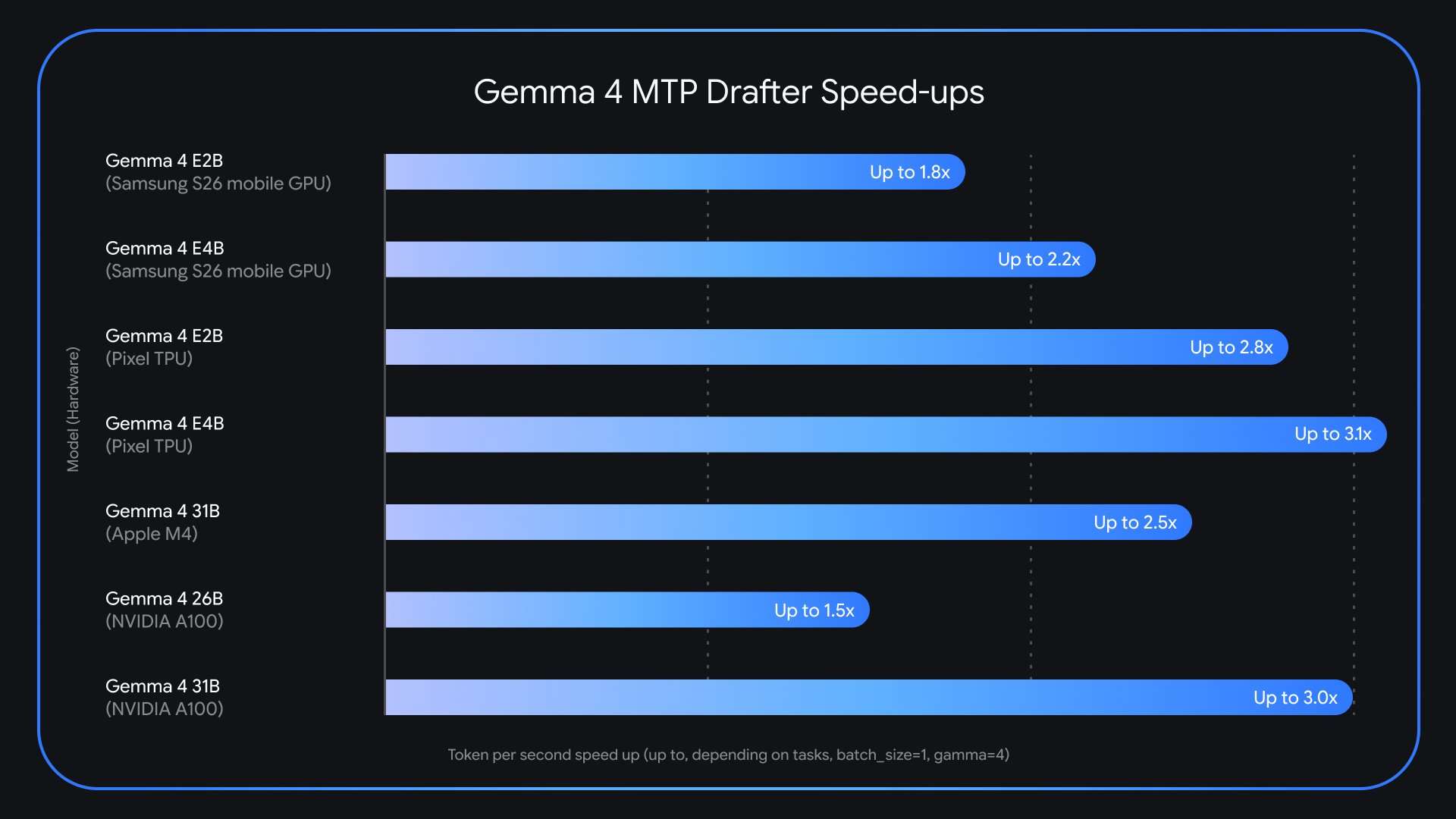
Google AI Releases Multi-Token Prediction (MTP) Drafters for Gemma 4: Delivering Up to 3x Faster Inference Without Quality Loss
MarkTechPost
When Claude Hallucinates in Court: The Latham & Watkins Incident and What It Means for Attorney Liability
MarkTechPost
Solidity LM surpasses Opus
Reddit r/LocalLLaMA


