
Apriel-Reasoner: RL Post-Training for General-Purpose and Efficient Reasoning
arXiv cs.LG / 4/3/2026
💬 OpinionSignals & Early TrendsIdeas & Deep AnalysisModels & Research
Key Points
- Apriel-Reasoner is presented as an RL post-training method for general-purpose and efficient reasoning, using verifiable rewards (RLVR) across multiple domains.
- The work claims a fully reproducible multi-domain training recipe on Apriel-Base (15B parameters), covering mathematics, code generation, instruction following, logical puzzles, and function calling.
- It introduces adaptive domain sampling to maintain target domain ratios despite differences in rollout length, difficulty, and sample efficiency across domains.
- A difficulty-aware length-penalty extension is proposed to encourage longer chain-of-thought traces for hard problems and shorter traces for easy ones, without additional training overhead.
- Experiments report improved benchmarks (AIME 2025, GPQA, MMLU-Pro, LiveCodeBench) versus Apriel-Base, while producing 30–50% shorter reasoning traces and showing generalization from a 16K training output budget to 32K at inference.
Related Articles

Black Hat Asia
AI Business

90000 Tech Workers Got Fired This Year and Everyone Is Blaming AI but Thats Not the Whole Story
Dev.to

Microsoft’s $10 Billion Japan Bet Shows the Next AI Battleground Is National Infrastructure
Dev.to
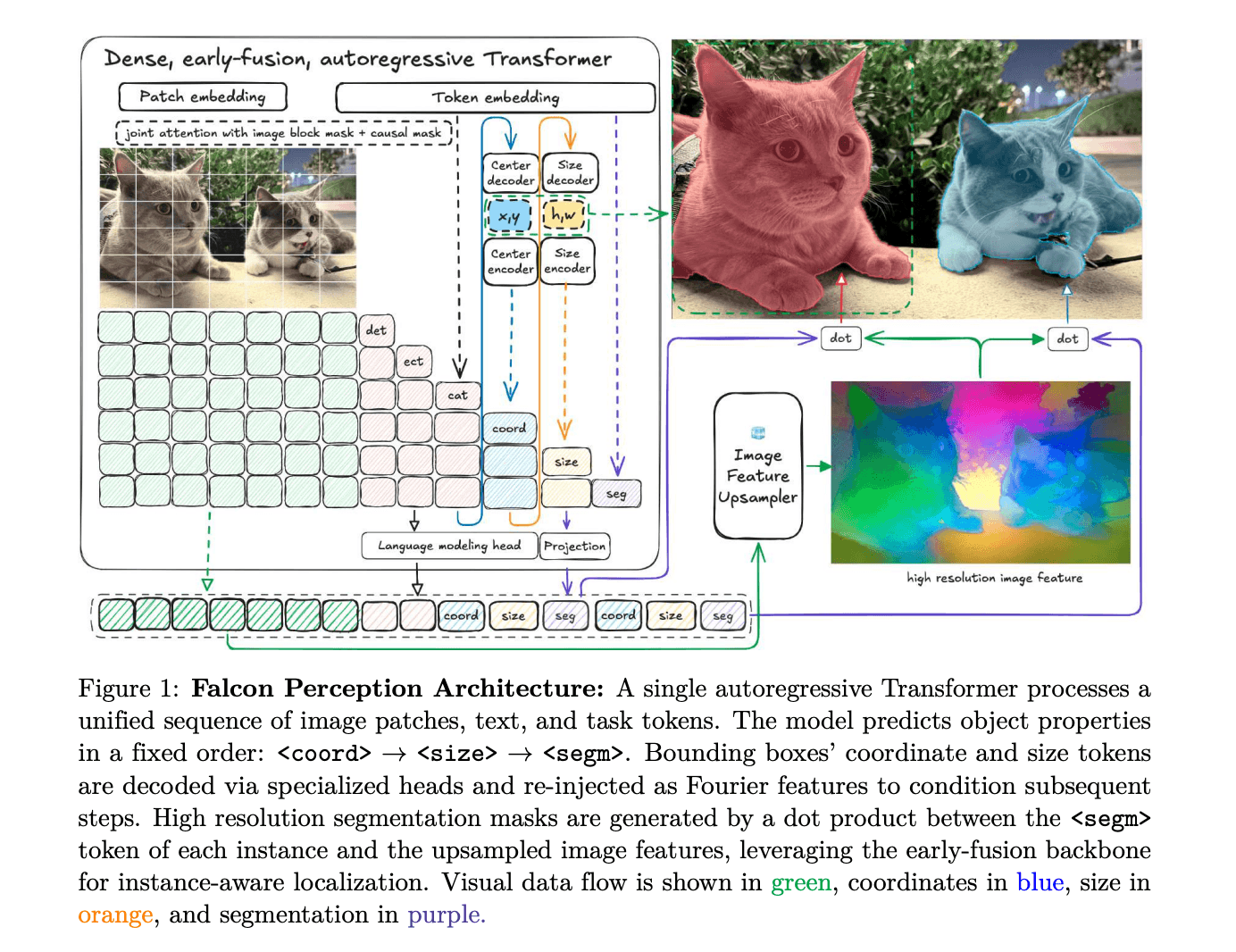
TII Releases Falcon Perception: A 0.6B-Parameter Early-Fusion Transformer for Open-Vocabulary Grounding and Segmentation from Natural Language Prompts
MarkTechPost

Portable eye scanner powered by AI expands access to low-cost community screening
Reddit r/artificial


