
BEVCALIB: LiDAR-Camera Calibration via Geometry-Guided Bird's-Eye View Representations
arXiv cs.CV / 5/6/2026
📰 NewsDeveloper Stack & InfrastructureModels & Research
Key Points
- The paper introduces BEVCALIB, a new approach for LiDAR–camera calibration that uses bird’s-eye view (BEV) features derived directly from raw data.
- It extracts camera BEV features and LiDAR BEV features separately, then fuses them into a shared BEV feature space to learn the cross-modal transformation.
- A geometry-guided feature selector is proposed to pick the most important features in the transformation decoder, lowering memory usage and improving training efficiency.
- Experiments on KITTI, NuScenes, and a proprietary dataset show state-of-the-art performance, with large gains in translation and rotation accuracy under noise.
- The authors report substantial improvements over open-source reproducible baselines (up to an order of magnitude) and provide code and demo materials online.
Related Articles

SIFS (SIFS Is Fast Search) - local code search for coding agents
Dev.to

BizNode's semantic memory (Qdrant) makes your bot smarter over time — it remembers past conversations and answers...
Dev.to
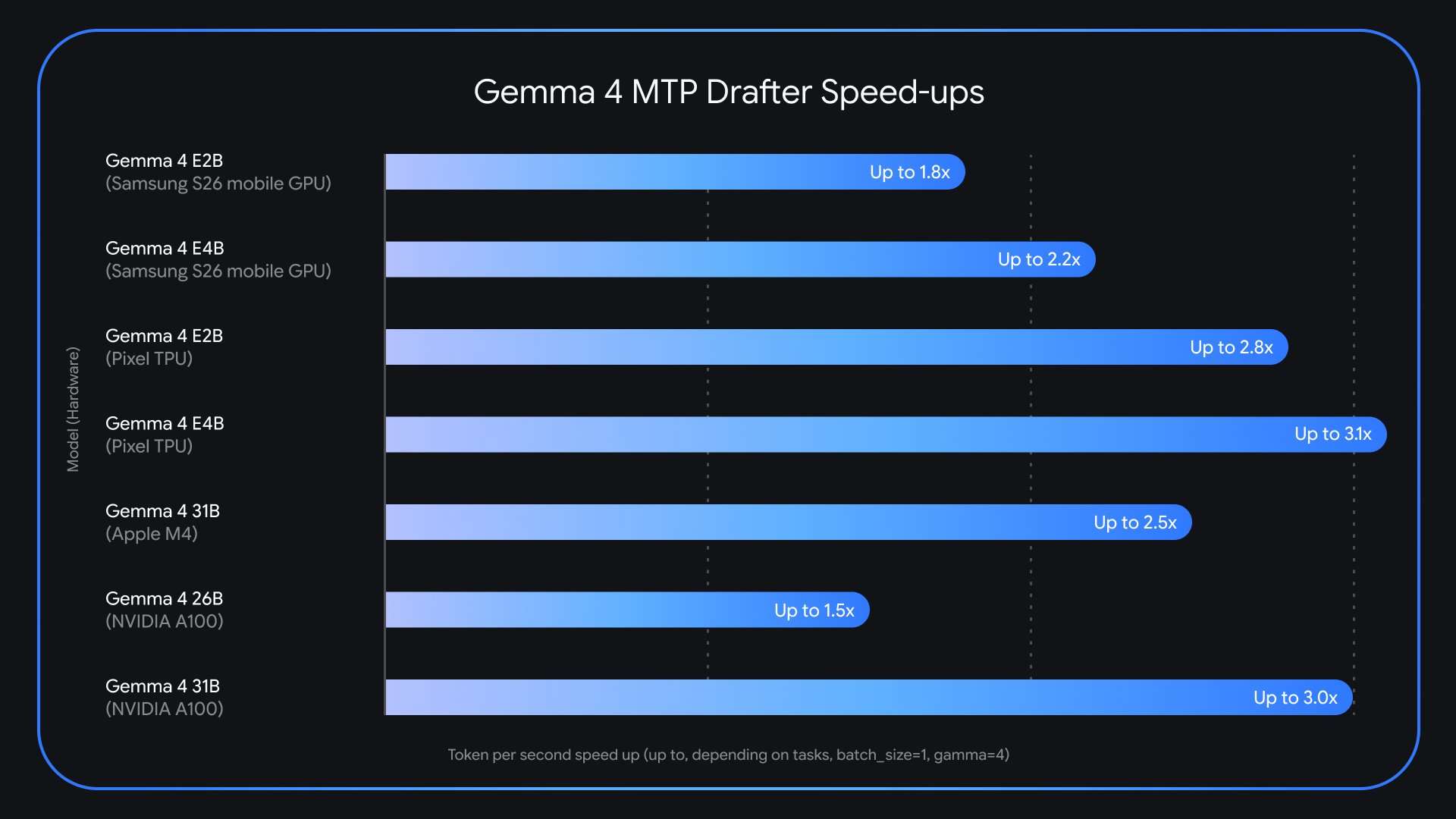
Google AI Releases Multi-Token Prediction (MTP) Drafters for Gemma 4: Delivering Up to 3x Faster Inference Without Quality Loss
MarkTechPost
Solidity LM surpasses Opus
Reddit r/LocalLLaMA

Quality comparison between Qwen 3.6 27B quantizations (BF16, Q8_0, Q6_K, Q5_K_XL, Q4_K_XL, IQ4_XS, IQ3_XXS,...)
Reddit r/LocalLLaMA


