
Detecting Neurovascular Instability from Multimodal Physiological Signals Using Wearable-Compatible Edge AI: A Responsible Computational Framework
arXiv cs.LG / 3/24/2026
💬 OpinionSignals & Early TrendsModels & Research
Key Points
- Melaguard is a lightweight multimodal ML framework that detects neurovascular instability (NVI) using wearable-compatible signals, combining HRV, peripheral perfusion index, SpO2, and bilateral phase coherence into a single NVI Score.
- The proposed Transformer-lite model (about 1.2M parameters) targets edge deployment with reported worst-case execution time (WCET) ≤ 4 ms on Cortex-M4, enabling near-real-time screening.
- Validation is performed across multiple stages and datasets, including a synthetic benchmark (AUC 0.88), a clinical cohort (AUC 0.755, outperforming LSTM/RF/SVM baselines), and additional PPG-related pipelines demonstrating strong cross-modality performance.
- The work argues that continuous multimodal physiological monitoring can detect pre-structural cerebrovascular dysregulation that single-modality wearables currently miss.
- The authors provide code for Melaguard to support reproducibility and further research into responsible edge AI for healthcare screening.
💡 Insights using this article
This article is featured in our daily AI news digest — key takeaways and action items at a glance.
Related Articles
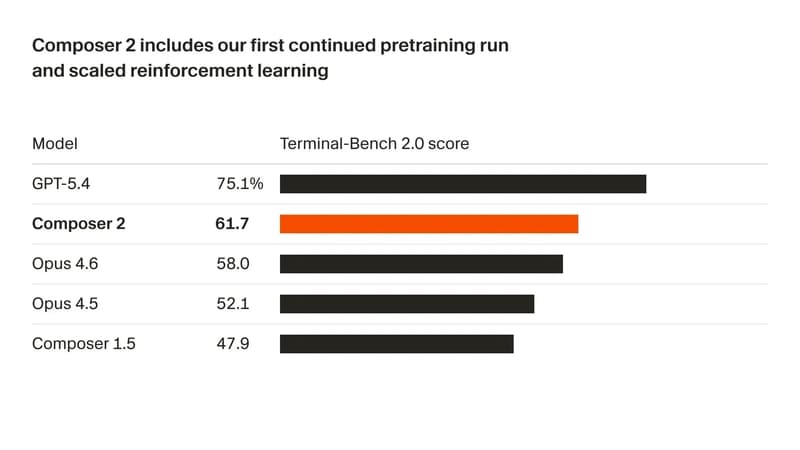
Composer 2: What is new and Compares with Claude Opus 4.6 & GPT-5.4
Dev.to
[D] Cathie wood claims ai productivity wave is starting, data shows 43% of ceos save 8+ hours weekly
Reddit r/MachineLearning

Microsoft hires top AI researchers from Allen Institute for AI for Suleyman's Superintelligence team
THE DECODER
MolmoWeb 4B/8B
Reddit r/LocalLLaMA
Malicious litellm_init.pth in litellm 1.82.8 — credential stealer
Simon Willison's Blog


