
GGD-SLAM: Monocular 3DGS SLAM Powered by Generalizable Motion Model for Dynamic Environments
arXiv cs.RO / 4/15/2026
📰 NewsSignals & Early TrendsIdeas & Deep AnalysisModels & Research
Key Points
- The paper introduces GGD-SLAM, a monocular SLAM framework that leverages 3D Gaussian Splatting to produce high-fidelity dense maps while overcoming the common failure of SLAM in dynamic environments.
- GGD-SLAM uses a generalizable motion model to improve both localization (camera pose estimation) and dense reconstruction without relying on predefined semantic annotations or external depth input.
- The system incorporates a FIFO queue plus sequential attention for dynamic semantic feature extraction, together with a dynamic feature enhancer to disentangle static and dynamic components.
- It reduces the harmful influence of dynamic distractors by filling occluded regions using static information sampling and by introducing a distractor-adaptive SSIM loss designed specifically for dynamic scenes.
- Experiments on real-world dynamic datasets report state-of-the-art performance for pose estimation and dense reconstruction in dynamic settings.
Related Articles

Black Hat Asia
AI Business

The Complete Guide to Better Meeting Productivity with AI Note-Taking
Dev.to

5 Ways Real-Time AI Can Boost Your Sales Call Performance
Dev.to
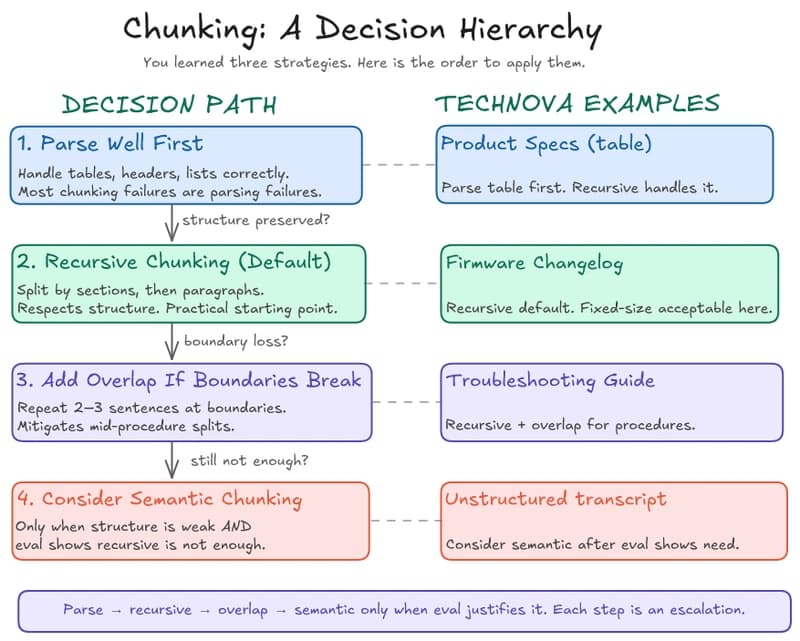
RAG in Practice — Part 4: Chunking, Retrieval, and the Decisions That Break RAG
Dev.to
Why dynamically routing multi-timescale advantages in PPO causes policy collapse (and a simple decoupled fix) [R]
Reddit r/MachineLearning


