
On the Identifiability of Tensor Ranks via Prior Predictive Matching
arXiv stat.ML / 4/3/2026
💬 OpinionIdeas & Deep AnalysisModels & Research
Key Points
- The paper tackles the problem of choosing the latent rank in tensor factorization by deriving a rigorous criterion for rank identifiability in probabilistic tensor models using prior predictive moment matching.
- It converts moment-matching conditions into a log-linear system whose solvability is shown to be equivalent to the identifiability of the tensor rank.
- The approach is applied to four classic tensor models (PARAFAC/CP, Tensor Train, Tensor Ring, and Tucker), showing that PARAFAC/CP’s linear structure, Tensor Train’s chain structure, and Tensor Ring’s closed-loop structure produce solvable systems.
- For the Tucker model, the authors prove the system is underdetermined due to its symmetric topology, so ranks are unidentifiable under this method.
- For the identifiable cases, the paper provides explicit closed-form rank estimators that rely only on moments computed from observed data, and validates them empirically with robustness checks.
Related Articles

90000 Tech Workers Got Fired This Year and Everyone Is Blaming AI but Thats Not the Whole Story
Dev.to

Microsoft’s $10 Billion Japan Bet Shows the Next AI Battleground Is National Infrastructure
Dev.to
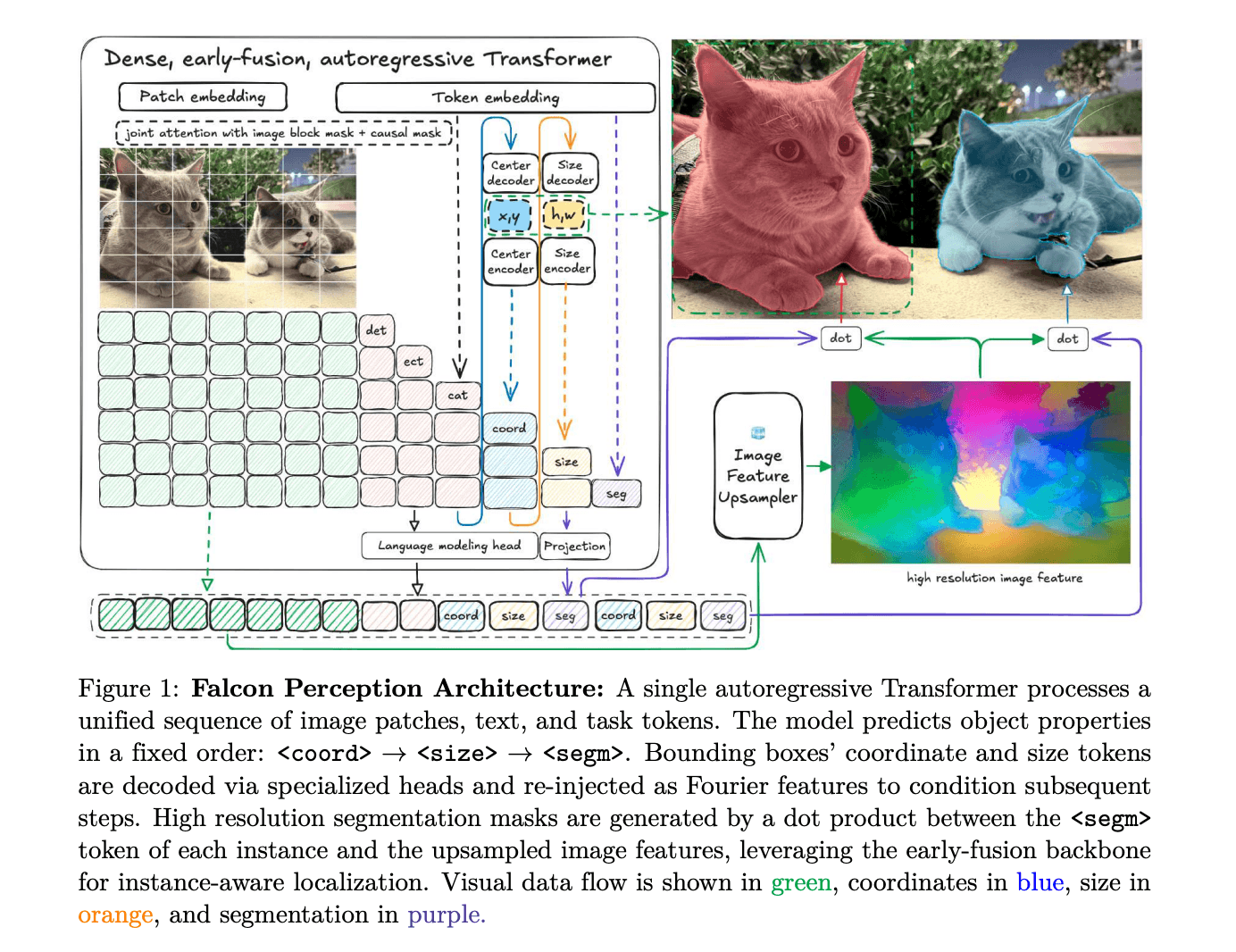
TII Releases Falcon Perception: A 0.6B-Parameter Early-Fusion Transformer for Open-Vocabulary Grounding and Segmentation from Natural Language Prompts
MarkTechPost

The house asked me a question
Dev.to

Precision Clip Selection: How AI Suggests Your In and Out Points
Dev.to


