
Toward Structural Multimodal Representations: Specialization, Selection, and Sparsification via Mixture-of-Experts
arXiv cs.LG / 5/6/2026
📰 NewsIdeas & Deep AnalysisModels & Research
Key Points
- The paper introduces S3 (Specialization, Selection, Sparsification), a structural framework for multimodal learning that replaces fixed embeddings with routed, task-relevant semantic experts.
- S3 uses specialization to create concept-level experts in a shared latent space, selection to adapt the routing per task, and sparsification to prune low-utility paths for compact representations.
- Experiments on four MultiBench benchmarks show S3 improves accuracy and exhibits a reverse U-shaped relationship between sparsity and performance, peaking at intermediate sparsity levels.
- The authors argue that modeling multimodal representations as selectable semantic components offers a principled alternative to contrastive learning and InfoMax-style objectives.
- The work highlights the idea that information-minimal (but well-structured) multimodal representations can be both efficient and effective when sparsity is carefully controlled.
Related Articles

Top 10 Free AI Tools for Students in 2026: The Ultimate Study Guide
Dev.to

AI as Your Contingency Co-Pilot: Automating Wedding Day 'What-Ifs'
Dev.to
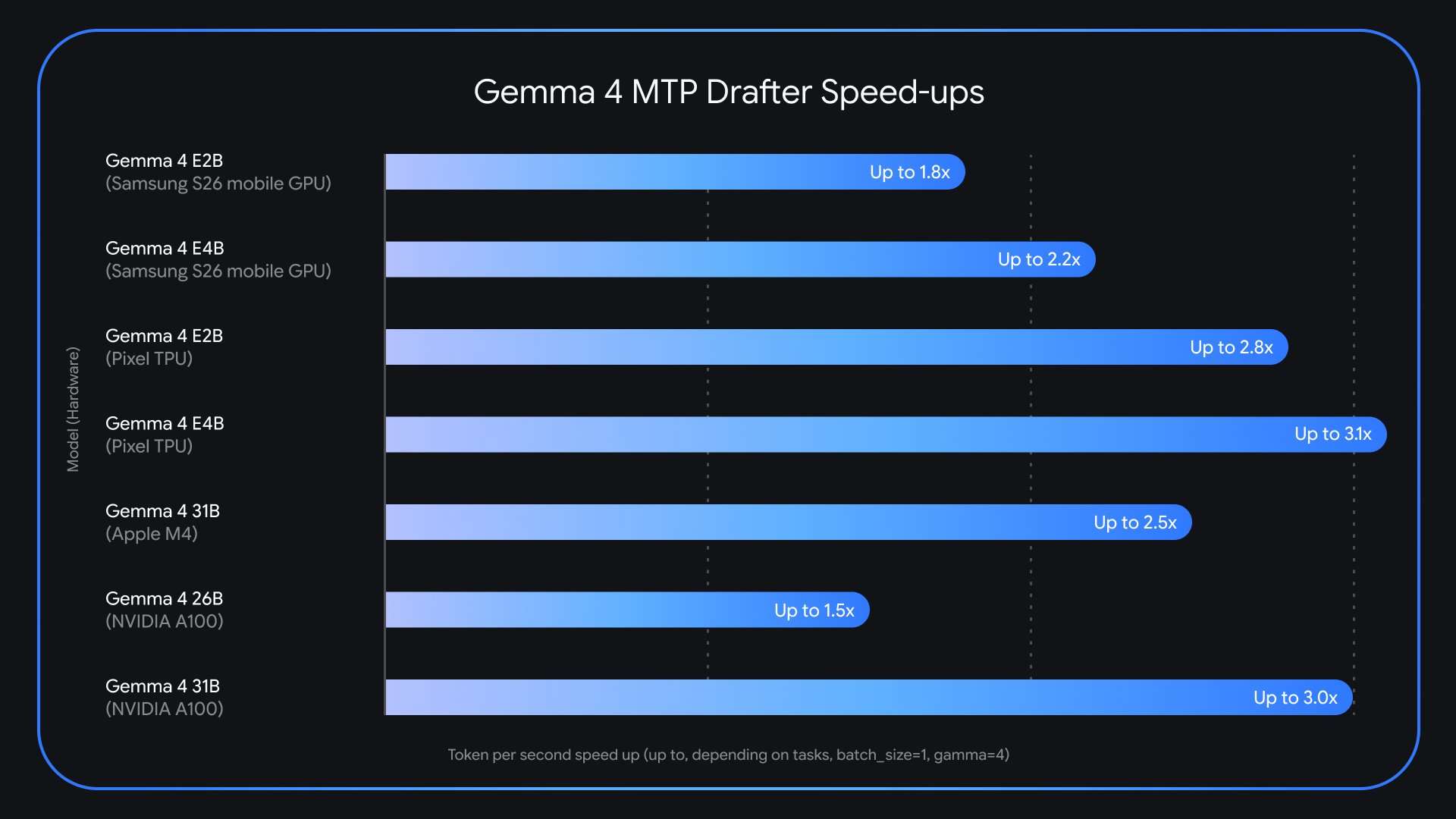
Google AI Releases Multi-Token Prediction (MTP) Drafters for Gemma 4: Delivering Up to 3x Faster Inference Without Quality Loss
MarkTechPost
When Claude Hallucinates in Court: The Latham & Watkins Incident and What It Means for Attorney Liability
MarkTechPost
Solidity LM surpasses Opus
Reddit r/LocalLLaMA


