
RPBA-Net: An Interpretable Residual Pyramid Bilateral Affine Network for RAW-Domain ISP Enhancement
arXiv cs.CV / 5/6/2026
📰 NewsIdeas & Deep AnalysisModels & Research
Key Points
- The paper introduces RPBA-Net, an interpretable residual pyramid bilateral affine network aimed at improving RAW-domain ISP tasks such as demosaicing, color correction, and detail enhancement while reducing fragmented modules.
- RPBA-Net takes packed RAW input and performs residual affine base reconstruction by estimating a base RGB representation and applying identity-guided residual affine corrections to unify demosaicing and enhancement.
- It uses pyramid bilateral affine grids with guide-driven autoregressive adaptive slicing and adaptive cross-layer fusion to model global tone restoration and local texture enhancement in a hierarchical manner.
- The method adds smoothness, cross-scale consistency, and magnitude regularization terms to enhance stability, controllability, and structural interpretability.
- Experiments report that RPBA-Net outperforms representative RAW-to-SRGB approaches, achieving state-of-the-art reconstruction fidelity and perceptual quality with low complexity suitable for mobile and embedded deployment.
Related Articles

Top 10 Free AI Tools for Students in 2026: The Ultimate Study Guide
Dev.to

AI as Your Contingency Co-Pilot: Automating Wedding Day 'What-Ifs'
Dev.to
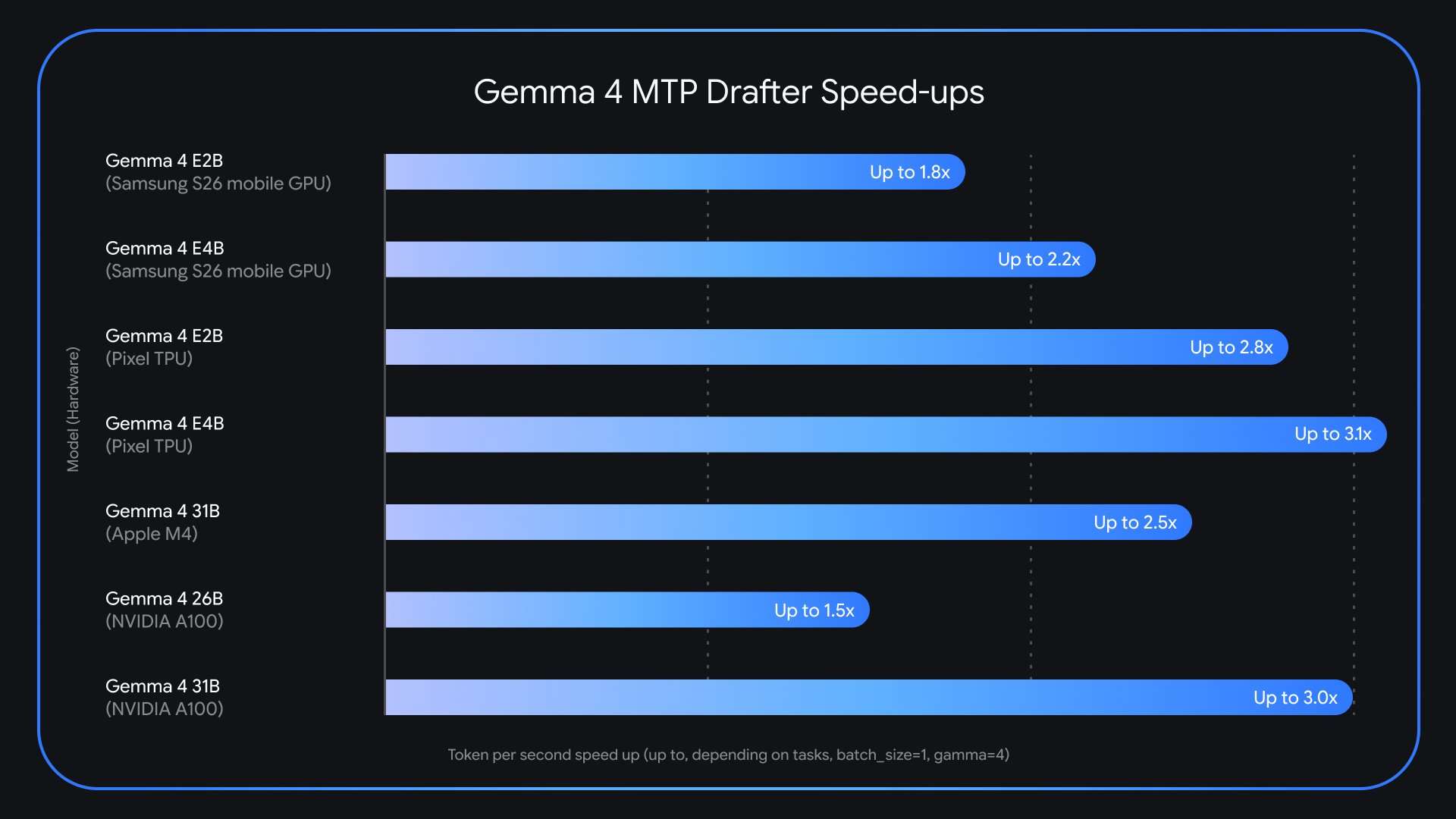
Google AI Releases Multi-Token Prediction (MTP) Drafters for Gemma 4: Delivering Up to 3x Faster Inference Without Quality Loss
MarkTechPost
When Claude Hallucinates in Court: The Latham & Watkins Incident and What It Means for Attorney Liability
MarkTechPost
Solidity LM surpasses Opus
Reddit r/LocalLLaMA


