
Efficient Adversarial Training via Criticality-Aware Fine-Tuning
arXiv cs.CV / 4/15/2026
💬 OpinionSignals & Early TrendsIdeas & Deep AnalysisModels & Research
Key Points
- Vision Transformer (ViT) models scale well for standard performance, but adversarial robustness does not improve proportionally as model size increases.
- The paper proposes Criticality-Aware Adversarial Training (CAAT), which fine-tunes only a small subset of parameters by identifying which weights are most critical for adversarial robustness.
- CAAT uses parameter-efficient fine-tuning (PEFT) to robustly adjust selected modules or weight matrices when the number of critical parameters passes a threshold, reducing training cost versus full-model adversarial training.
- Experiments on three adversarial learning datasets show CAAT generalizes to larger ViT architectures and achieves robustness close to standard adversarial training, with only a 4.3% drop while tuning about 6% of parameters.
- The results indicate CAAT can outperform existing lightweight adversarial training approaches that train fewer parameters, suggesting a path toward adversarial training at scale.
Related Articles

Black Hat Asia
AI Business

The Complete Guide to Better Meeting Productivity with AI Note-Taking
Dev.to

5 Ways Real-Time AI Can Boost Your Sales Call Performance
Dev.to
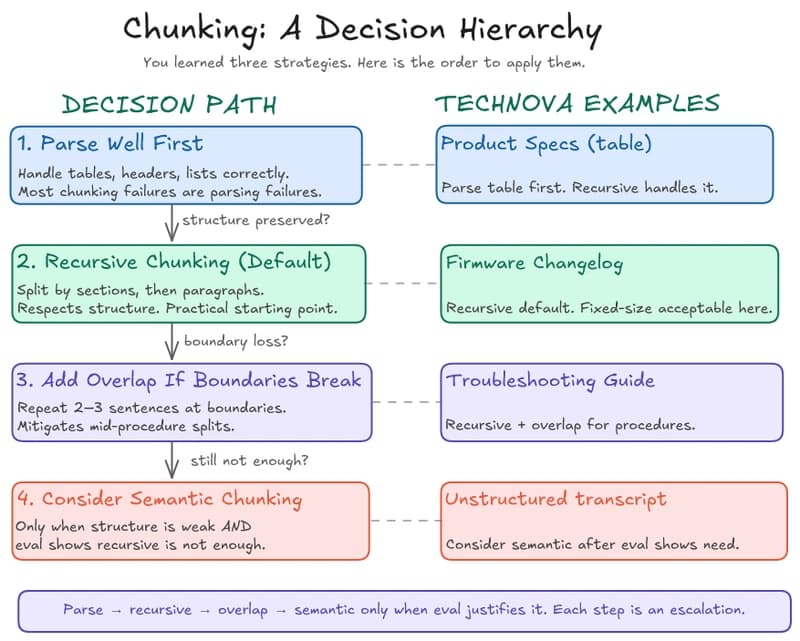
RAG in Practice — Part 4: Chunking, Retrieval, and the Decisions That Break RAG
Dev.to
Why dynamically routing multi-timescale advantages in PPO causes policy collapse (and a simple decoupled fix) [R]
Reddit r/MachineLearning


