
KV Cache Optimization Strategies for Scalable and Efficient LLM Inference
arXiv cs.LG / 3/24/2026
💬 OpinionSignals & Early TrendsIdeas & Deep AnalysisModels & Research
Key Points
- The paper reviews how KV caches in Transformer-based LLMs reduce redundant computation during autoregressive generation, but also create a linear memory growth bottleneck as context lengths scale to millions of tokens.
- It categorizes KV cache optimization methods into five directions—cache eviction, cache compression, hybrid memory, novel attention mechanisms, and combined approaches—and evaluates their trade-offs across memory use, throughput, and accuracy.
- The analysis shows that performance depends strongly on deployment context, with the best approach varying by context length, hardware limits, and workload characteristics rather than any single universally superior technique.
- It maps techniques to seven practical scenarios, including long-context requests, high-throughput datacenter serving, edge deployment, multi-turn chats, and accuracy-critical reasoning, offering guidance for selecting strategies.
- The authors conclude that adaptive, multi-stage optimization pipelines are a promising direction to handle diverse workloads and constraints in real deployments.
Related Articles
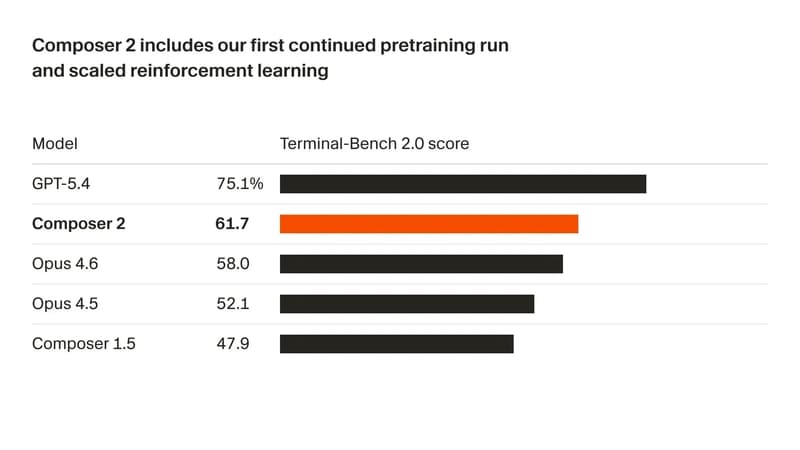
Composer 2: What is new and Compares with Claude Opus 4.6 & GPT-5.4
Dev.to
How UCP Breaks Your E-Commerce Tracking Stack: A Platform-by-Platform Analysis
Dev.to
AI Text Analyzer vs Asking Friends: Which Gives Better Perspective?
Dev.to
[D] Cathie wood claims ai productivity wave is starting, data shows 43% of ceos save 8+ hours weekly
Reddit r/MachineLearning

Microsoft hires top AI researchers from Allen Institute for AI for Suleyman's Superintelligence team
THE DECODER


