
Compensating Visual Insufficiency with Stratified Language Guidance for Long-Tail Class Incremental Learning
arXiv cs.AI / 3/24/2026
💬 OpinionIdeas & Deep AnalysisModels & Research
Key Points
- The paper addresses long-tail class incremental learning (LT CIL), where scarce tail-class samples both slow learning and worsen catastrophic forgetting under shifting, imbalanced data streams.
- It proposes using language knowledge from large language models (LLMs) by analyzing the LT CIL data distribution to build a stratified language tree that organizes semantics from coarse to fine granularity.
- It introduces stratified adaptive language guidance that uses learnable weights to merge multi-scale semantic representations, enabling supervision to dynamically adjust for tail classes despite imbalance.
- It also presents stratified alignment language guidance that constrains optimization using the structural stability of the language tree to improve semantic visual alignment and reduce catastrophic forgetting.
- Experiments across multiple benchmarks reportedly achieve state-of-the-art performance, indicating the approach is effective for LT CIL.
Related Articles
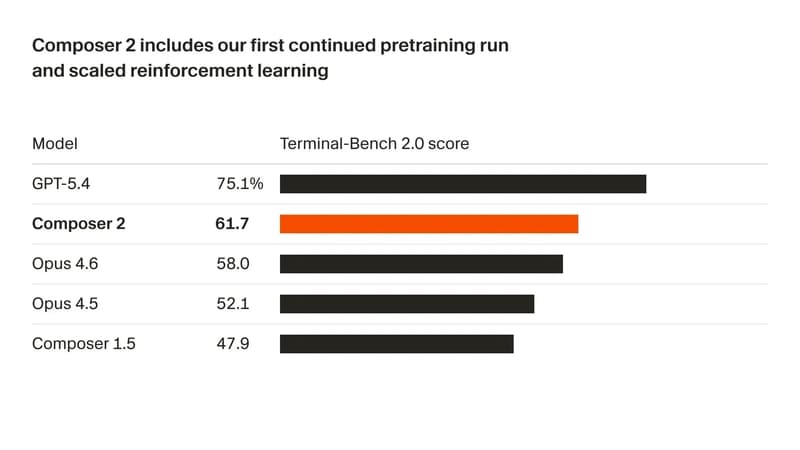
Composer 2: What is new and Compares with Claude Opus 4.6 & GPT-5.4
Dev.to
How UCP Breaks Your E-Commerce Tracking Stack: A Platform-by-Platform Analysis
Dev.to
AI Text Analyzer vs Asking Friends: Which Gives Better Perspective?
Dev.to
[D] Cathie wood claims ai productivity wave is starting, data shows 43% of ceos save 8+ hours weekly
Reddit r/MachineLearning

Microsoft hires top AI researchers from Allen Institute for AI for Suleyman's Superintelligence team
THE DECODER


