
Dual-Cluster Memory Agent: Resolving Multi-Paradigm Ambiguity in Optimization Problem Solving
arXiv cs.CL / 4/23/2026
📰 NewsIdeas & Deep AnalysisModels & Research
Key Points
- LLMs can struggle with structural ambiguity in optimization tasks when multiple modeling paradigms fit the same problem, leading to conflicting solution generation strategies.
- The paper introduces the Dual-Cluster Memory Agent (DCM-Agent), which builds training-free memory by clustering historical solutions into modeling and coding groups and distilling them into structured knowledge (Approach, Checklist, Pitfall).
- Using memory-augmented inference, DCM-Agent dynamically selects and switches reasoning paths, detects and repairs errors, and adapts solution trajectories based on the stored guidance.
- Experiments on seven optimization benchmarks show an average performance gain of 11%–21% compared with baselines.
- The authors find a “knowledge inheritance” effect where memory created by larger models can help smaller models perform better, suggesting scalability and efficiency of the framework.
Related Articles

Big Tech firms are accelerating AI investments and integration, while regulators and companies focus on safety and responsible adoption.
Dev.to

Trajectory Forecasts in Unknown Environments Conditioned on Grid-Based Plans
Dev.to
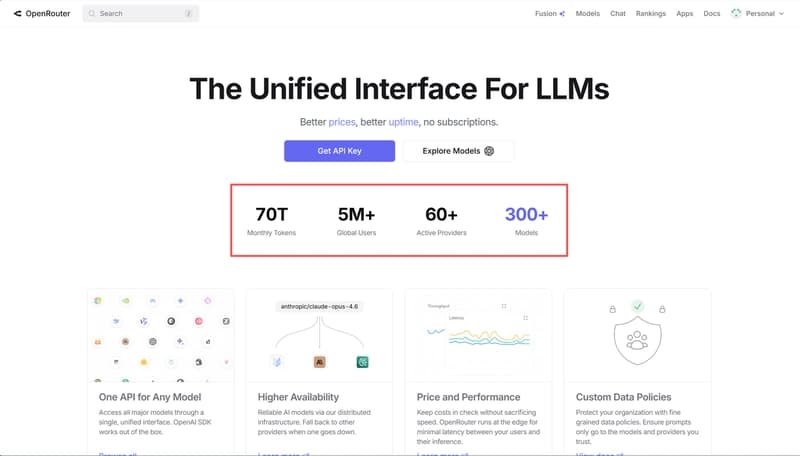
Why use an AI gateway at all?
Dev.to
OpenAI Just Named It Workspace Agents. We Open-Sourced Our Lark Version Six Months Ago
Dev.to

GPT Image 2 Subject-Lock Editing: A Practical Guide to input_fidelity
Dev.to


