
Towards Practical Multimodal Hospital Outbreak Detection
arXiv cs.LG / 3/24/2026
💬 OpinionSignals & Early TrendsIdeas & Deep AnalysisModels & Research
Key Points
- The paper argues that rapid hospital outbreak detection is constrained by the cost and turnaround time of whole genome sequencing (WGS), making routine surveillance difficult in many facilities.
- It evaluates three faster modalities—MALDI-TOF mass spectrometry, antimicrobial resistance (AR) patterns, and electronic health records (EHR)—and proposes a machine learning method to learn discriminative features across them.
- Results from multi-species experiments suggest that integrating these modalities improves outbreak detection performance compared with relying on a single source.
- The authors introduce a tiered surveillance approach that uses these alternatives to reduce dependence on WGS while still enabling outbreak detection.
- By analyzing EHR data, the study identifies higher-risk contamination routes tied to specific procedures, especially those involving invasive equipment and high-frequency workflows, to support proactive infection prevention actions.
Related Articles
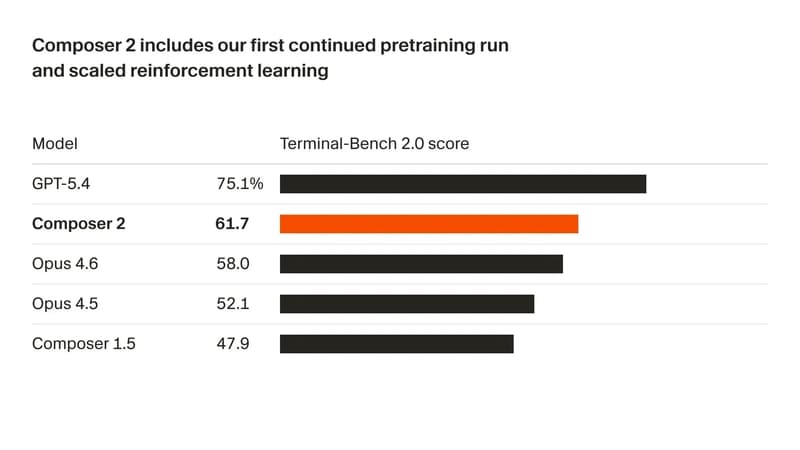
Composer 2: What is new and Compares with Claude Opus 4.6 & GPT-5.4
Dev.to
How UCP Breaks Your E-Commerce Tracking Stack: A Platform-by-Platform Analysis
Dev.to
AI Text Analyzer vs Asking Friends: Which Gives Better Perspective?
Dev.to
[D] Cathie wood claims ai productivity wave is starting, data shows 43% of ceos save 8+ hours weekly
Reddit r/MachineLearning

Microsoft hires top AI researchers from Allen Institute for AI for Suleyman's Superintelligence team
THE DECODER


