
Improving RCT-Based Treatment Effect Estimation Under Covariate Mismatch via Calibrated Alignment
arXiv cs.LG / 3/20/2026
📰 NewsSignals & Early TrendsIdeas & Deep AnalysisModels & Research
Key Points
- A new method CALM (Calibrated ALignment under covariate Mismatch) is proposed to improve heterogeneous treatment effect estimation by combining RCTs with observational studies despite covariate mismatch.
- It learns embeddings to map each data source's features into a common representation and calibrates observational outcome models in the RCT embedding space, preserving causal identification from randomization.
- Finite-sample risk bounds decompose into alignment error, outcome-model complexity, and calibration complexity, clarifying when embedding-based alignment outperforms imputation.
- The calibration-based linear variant offers protection against negative transfer, while the neural variant can be vulnerable under severe distributional shift; under sparse linear models, embedding generalizes imputation.
- In simulations across 51 settings, CALM shows equivalence to linear CATEs for linear cases and a neural-embedding variant winning all nonlinear regimes with large margins.
Related Articles
Day 10: 230 Sessions of Hustle and It Comes Down to One Person Reading a Document
Dev.to

5 Dangerous Lies Behind Viral AI Coding Demos That Break in Production
Dev.to
Two bots, one confused server: what Nimbus revealed about AI agent identity
Dev.to
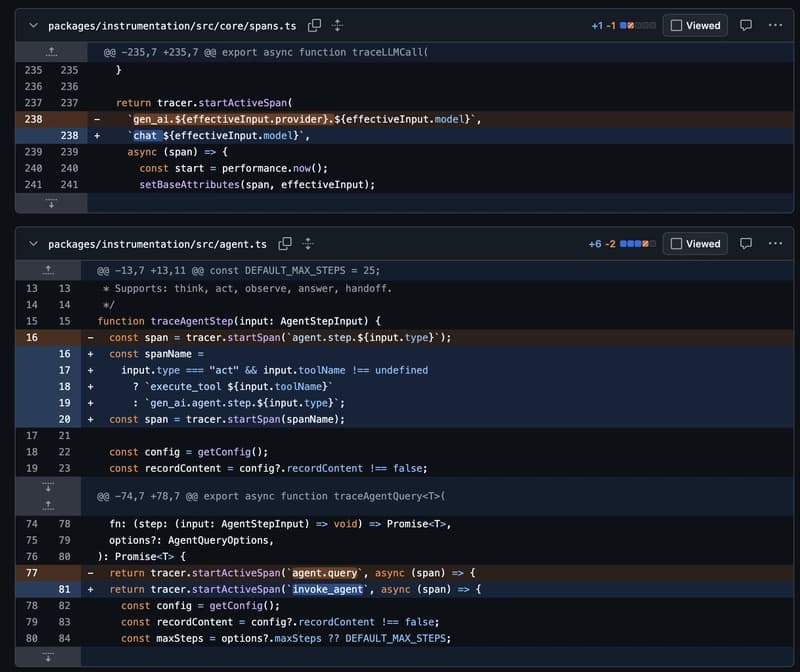
OpenTelemetry just standardized LLM tracing. Here's what it actually looks like in code.
Dev.to
PIXIU: A Large Language Model, Instruction Data and Evaluation Benchmark forFinance
Dev.to


