
Lever: Inference-Time Policy Reuse under Support Constraints
arXiv cs.LG / 4/23/2026
📰 NewsIdeas & Deep AnalysisModels & Research
Key Points
- The paper studies whether reinforcement learning (RL) policies can be reused at inference time by composing a high-quality policy for a new composite objective without any additional environment interaction.
- It introduces “lever,” an end-to-end framework that retrieves pre-trained policies, scores/evaluates them via behavioral embeddings, and composes them using offline Q-value composition.
- The authors focus on a support-limited setting where value propagation is not possible, finding that reuse quality depends heavily on how well the available policies cover the relevant transitions.
- lever includes composition strategies that trade off performance and computation by limiting exploration over candidate policies.
- Experiments in deterministic GridWorld show offline inference-time composition can match or sometimes exceed training-from-scratch performance with meaningful speedups, but performance drops for long-horizon tasks that would require value propagation.
Related Articles

Big Tech firms are accelerating AI investments and integration, while regulators and companies focus on safety and responsible adoption.
Dev.to

Trajectory Forecasts in Unknown Environments Conditioned on Grid-Based Plans
Dev.to
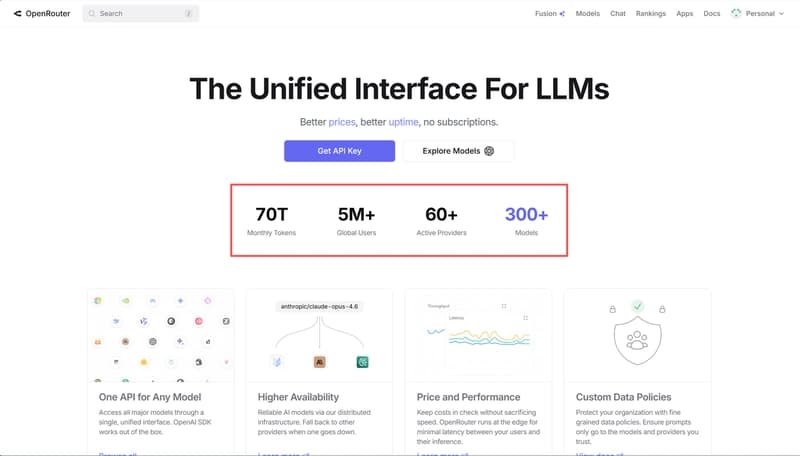
Why use an AI gateway at all?
Dev.to
OpenAI Just Named It Workspace Agents. We Open-Sourced Our Lark Version Six Months Ago
Dev.to

GPT Image 2 Subject-Lock Editing: A Practical Guide to input_fidelity
Dev.to


