
RARE: Redundancy-Aware Retrieval Evaluation Framework for High-Similarity Corpora
arXiv cs.CL / 4/22/2026
📰 NewsIdeas & Deep AnalysisModels & Research
Key Points
- Existing QA and retrieval benchmarks often assume low document overlap, which can make evaluation results unreliable for real-world RAG corpora with highly redundant, high-similarity documents.
- The paper introduces RARE (Redundancy-Aware Retrieval Evaluation), which builds more realistic benchmarks by decomposing documents into atomic facts for redundancy tracking and by using CRRF to improve LLM-generated benchmark data.
- CRRF scores multiple quality criteria separately and fuses them by rank, helping avoid trivial or low-quality outputs from LLMs when generating benchmark data.
- Experiments on Finance, Legal, and Patent corpora via RedQA show large drops in retriever performance on deeper, high-hop tasks compared with standard benchmarks, exposing robustness gaps they fail to capture.
- RARE is positioned as a framework that practitioners can use to create domain-specific RAG evaluations that better match deployment conditions.
Related Articles
The 67th Attempt: When Your "Knowledge Management" System Becomes a Self-Fulfilling Prophecy of Excellence
Dev.to
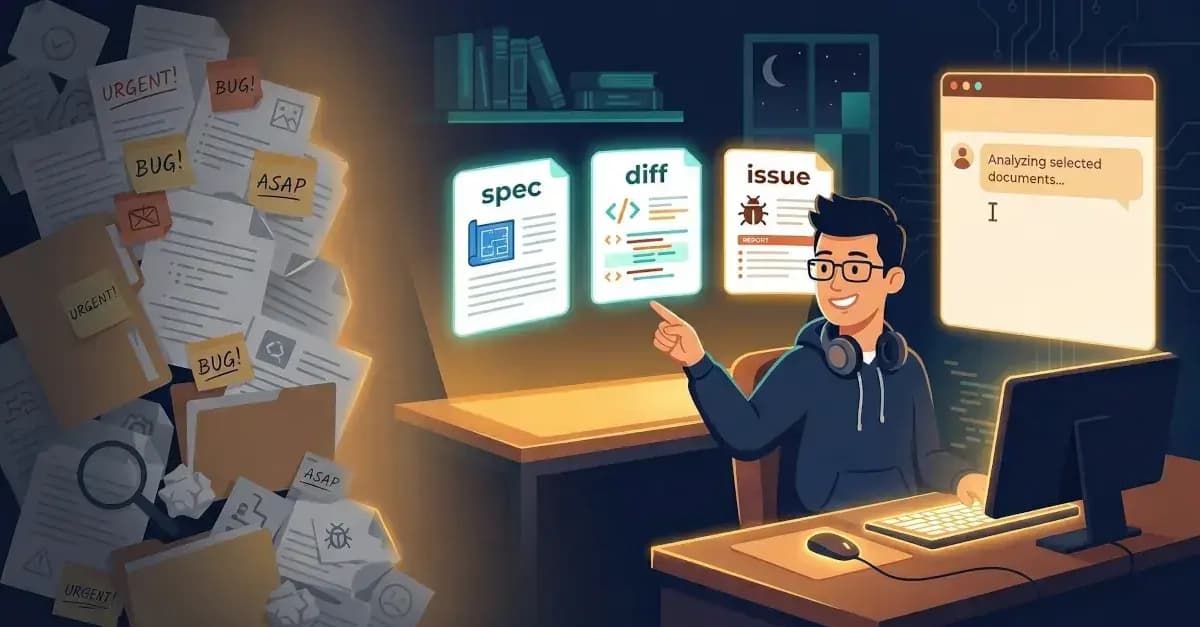
Context Engineering for Developers: A Practical Guide (2026)
Dev.to
GPT-5.5 is here. So is DeepSeek V4. And honestly, I am tired of version numbers.
Dev.to
I Built an AI Image Workflow with GPT Image 2.0 (+ Fixing Its Biggest Flaw)
Dev.to
Max-and-Omnis/Nemotron-3-Super-64B-A12B-Math-REAP-GGUF
Reddit r/LocalLLaMA


