
Quaternion Wavelet-Conditioned Diffusion Models for Image Super-Resolution
arXiv cs.CV / 5/6/2026
💬 OpinionIdeas & Deep AnalysisModels & Research
Key Points
- The paper proposes ResQu, a new image super-resolution framework that combines quaternion wavelet preprocessing with latent diffusion models to improve reconstruction quality.
- ResQu introduces a quaternion wavelet- and time-aware encoder and uses quaternion wavelet embeddings dynamically across different denoising stages, aiming to better balance perceptual realism and structural fidelity.
- The method also leverages generative priors from foundation models such as Stable Diffusion to strengthen its high-quality image generation.
- Experiments on domain-specific datasets show that ResQu achieves strong super-resolution performance, often outperforming existing approaches on perceptual and standard evaluation metrics.
- The authors provide an open-source code repository for implementation and reproducibility.
Related Articles

Top 10 Free AI Tools for Students in 2026: The Ultimate Study Guide
Dev.to

AI as Your Contingency Co-Pilot: Automating Wedding Day 'What-Ifs'
Dev.to
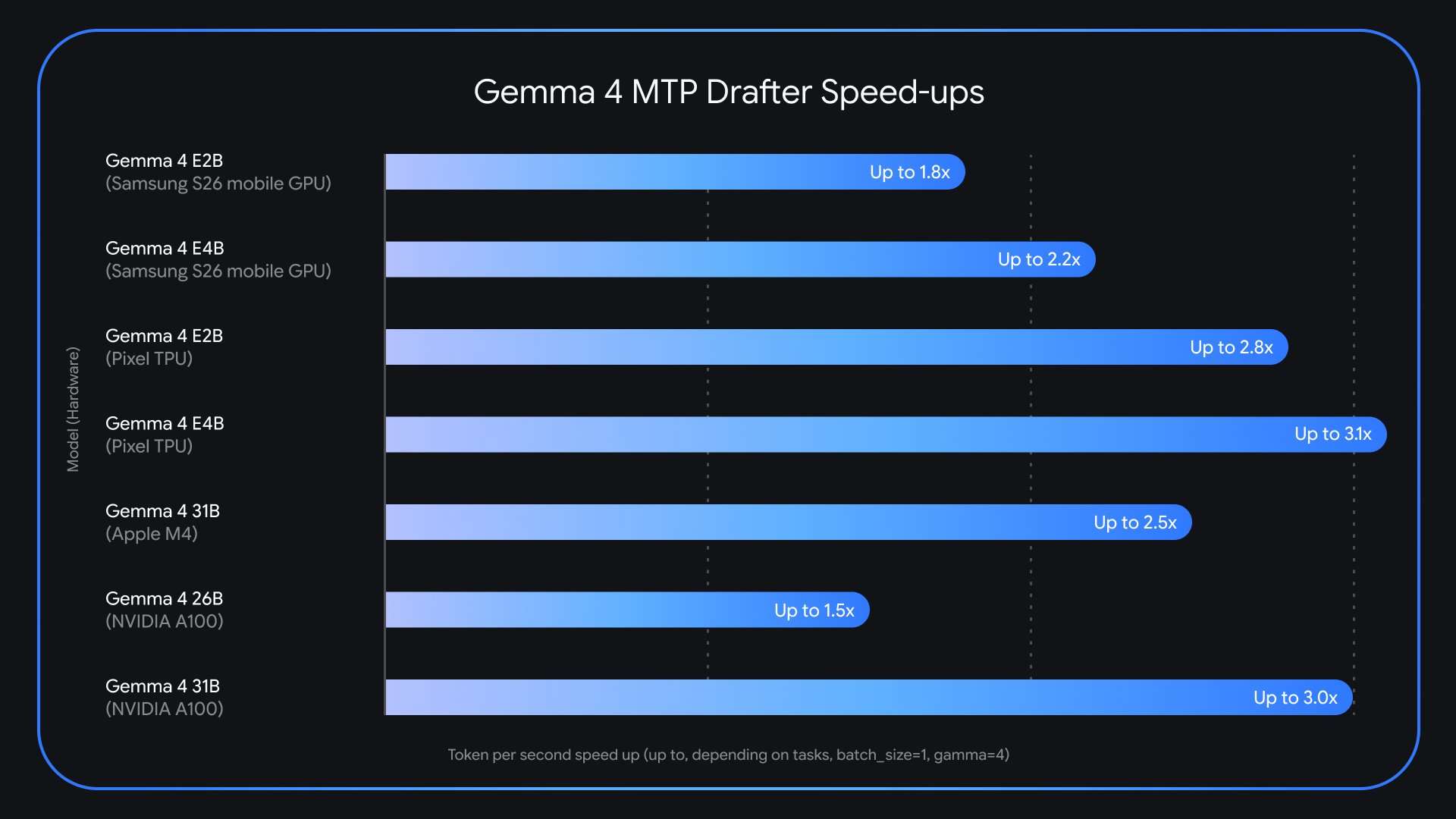
Google AI Releases Multi-Token Prediction (MTP) Drafters for Gemma 4: Delivering Up to 3x Faster Inference Without Quality Loss
MarkTechPost
When Claude Hallucinates in Court: The Latham & Watkins Incident and What It Means for Attorney Liability
MarkTechPost
Solidity LM surpasses Opus
Reddit r/LocalLLaMA


