
Anomaly detection in time-series via inductive biases in the latent space of conditional normalizing flows
arXiv cs.AI / 3/13/2026
📰 NewsIdeas & Deep AnalysisModels & Research
Key Points
- The paper relocates anomaly detection to a latent space governed by explicit latent dynamics in a discrete-time state-space framework using conditional normalizing flows.
- It introduces inductive biases to ensure latent representations evolve according to prescribed temporal dynamics, aligning anomaly definition with violations of these dynamics.
- Anomaly detection is performed as a goodness-of-fit test in latent space, mapping observations into latent space and testing compliance with the latent evolution distribution.
- This approach remains effective even where observation likelihood is high and provides interpretable diagnostics of model compliance, demonstrated on synthetic and real-world time-series across frequency, amplitude, and noise.
- It reframes anomaly detection beyond marginal likelihood, addressing structural limitations of likelihood-based methods.
Related Articles
Day 10: 230 Sessions of Hustle and It Comes Down to One Person Reading a Document
Dev.to

5 Dangerous Lies Behind Viral AI Coding Demos That Break in Production
Dev.to
Two bots, one confused server: what Nimbus revealed about AI agent identity
Dev.to
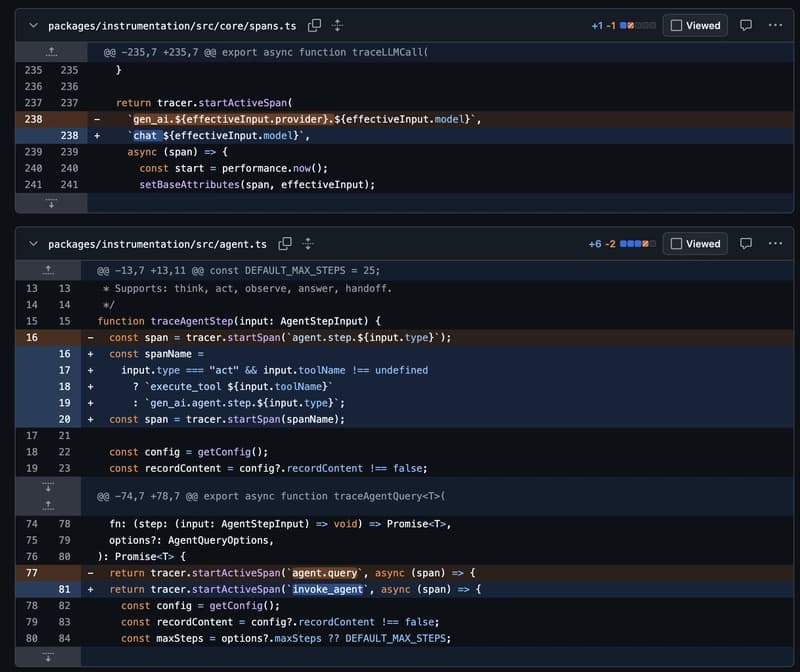
OpenTelemetry just standardized LLM tracing. Here's what it actually looks like in code.
Dev.to
PIXIU: A Large Language Model, Instruction Data and Evaluation Benchmark forFinance
Dev.to


