
PAMNet: Cycle-aware Phase-Amplitude Modulation Network for Multivariate Time Series Forecasting
arXiv cs.LG / 5/6/2026
📰 NewsIdeas & Deep AnalysisModels & Research
Key Points
- The paper introduces PAMNet, a model designed for multivariate time series forecasting that explicitly represents periodic patterns rather than relying on implicit extraction.
- PAMNet decomposes periodic components into phase and amplitude parts and uses a dual-branch modulator with learnable embeddings to capture phase-dependent mean shifts and amplitude-driven intensity/variance changes.
- A lightweight element-wise fusion mechanism combines phase and amplitude signals, avoiding heavy attention-based architectures while still modeling their interactions.
- Experiments on 12 real-world datasets show PAMNet delivers state-of-the-art results, highlighting the effectiveness of phase-amplitude decoupling for cyclical forecasting.
- The work provides a new framework for cycle-aware modeling that can improve how periodicity and variability are handled in forecasting pipelines.
Related Articles

Top 10 Free AI Tools for Students in 2026: The Ultimate Study Guide
Dev.to

AI as Your Contingency Co-Pilot: Automating Wedding Day 'What-Ifs'
Dev.to
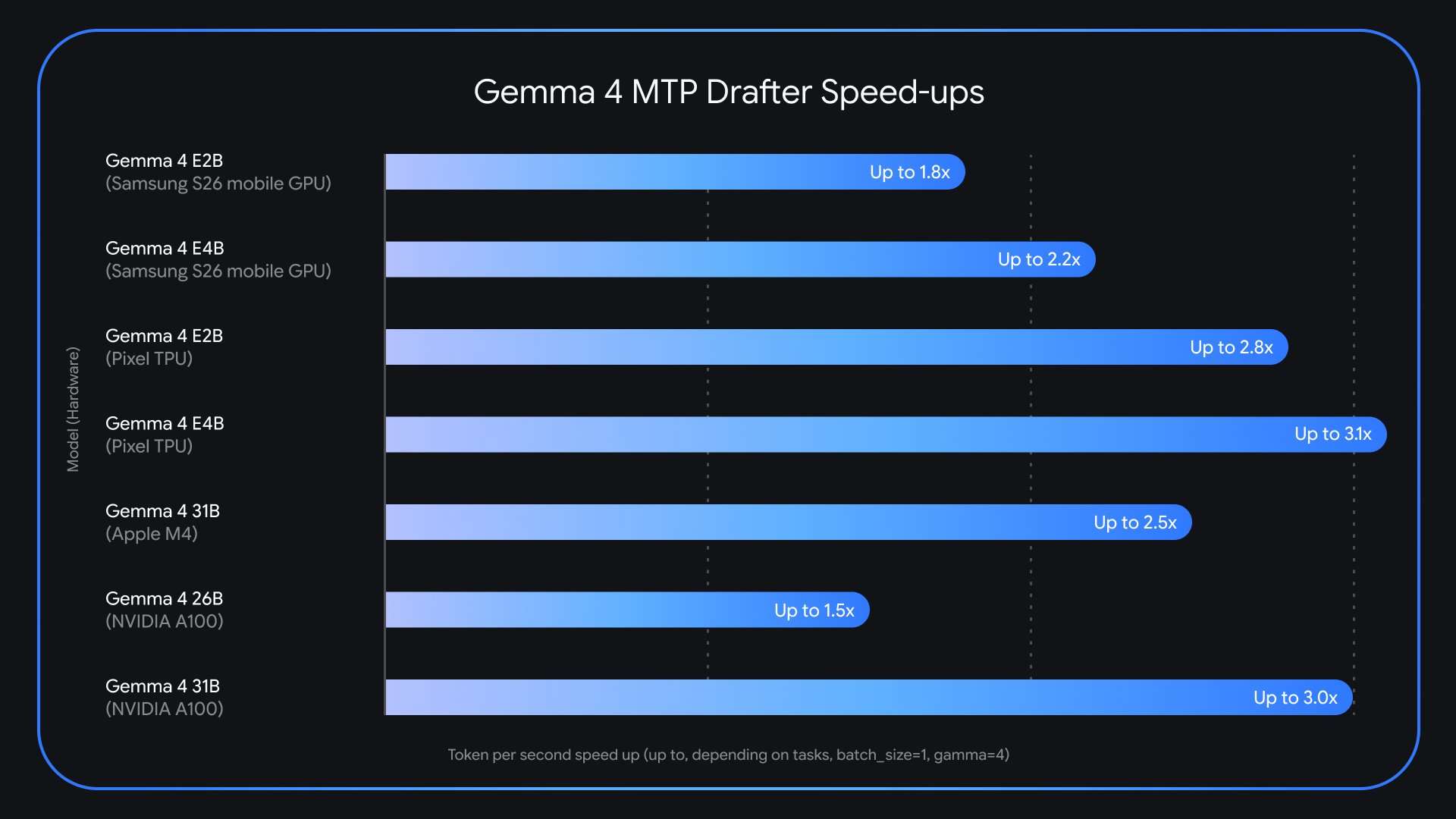
Google AI Releases Multi-Token Prediction (MTP) Drafters for Gemma 4: Delivering Up to 3x Faster Inference Without Quality Loss
MarkTechPost
When Claude Hallucinates in Court: The Latham & Watkins Incident and What It Means for Attorney Liability
MarkTechPost
Solidity LM surpasses Opus
Reddit r/LocalLLaMA


