
MorphoGuard: A Morphology-Based Whole-Body Interactive Motion Controller
arXiv cs.RO / 4/3/2026
💬 OpinionIdeas & Deep AnalysisModels & Research
Key Points
- The paper proposes MorphoGuard, a morphology-constrained whole-body control method designed to manage arbitrary multi-contact combinations along a single kinematic chain during interactive whole-body robotic tasks.
- It addresses key challenges in representing complex contacts and mitigating joint configuration coupling for scenarios like using one body part to push while another grasps simultaneously.
- MorphoGuard is trained using a self-built dual-arm physical-and-simulation platform, and includes model recommendation experiments that test backbone architecture, fusion strategy, and model scale.
- For evaluation, the authors use a multi-object interaction benchmark where the robot must manipulate multiple objects to target positions at the same time.
- Results show about 1 cm contact point management error, indicating improved effectiveness for whole-body interactive motion control.
Related Articles

90000 Tech Workers Got Fired This Year and Everyone Is Blaming AI but Thats Not the Whole Story
Dev.to

Microsoft’s $10 Billion Japan Bet Shows the Next AI Battleground Is National Infrastructure
Dev.to
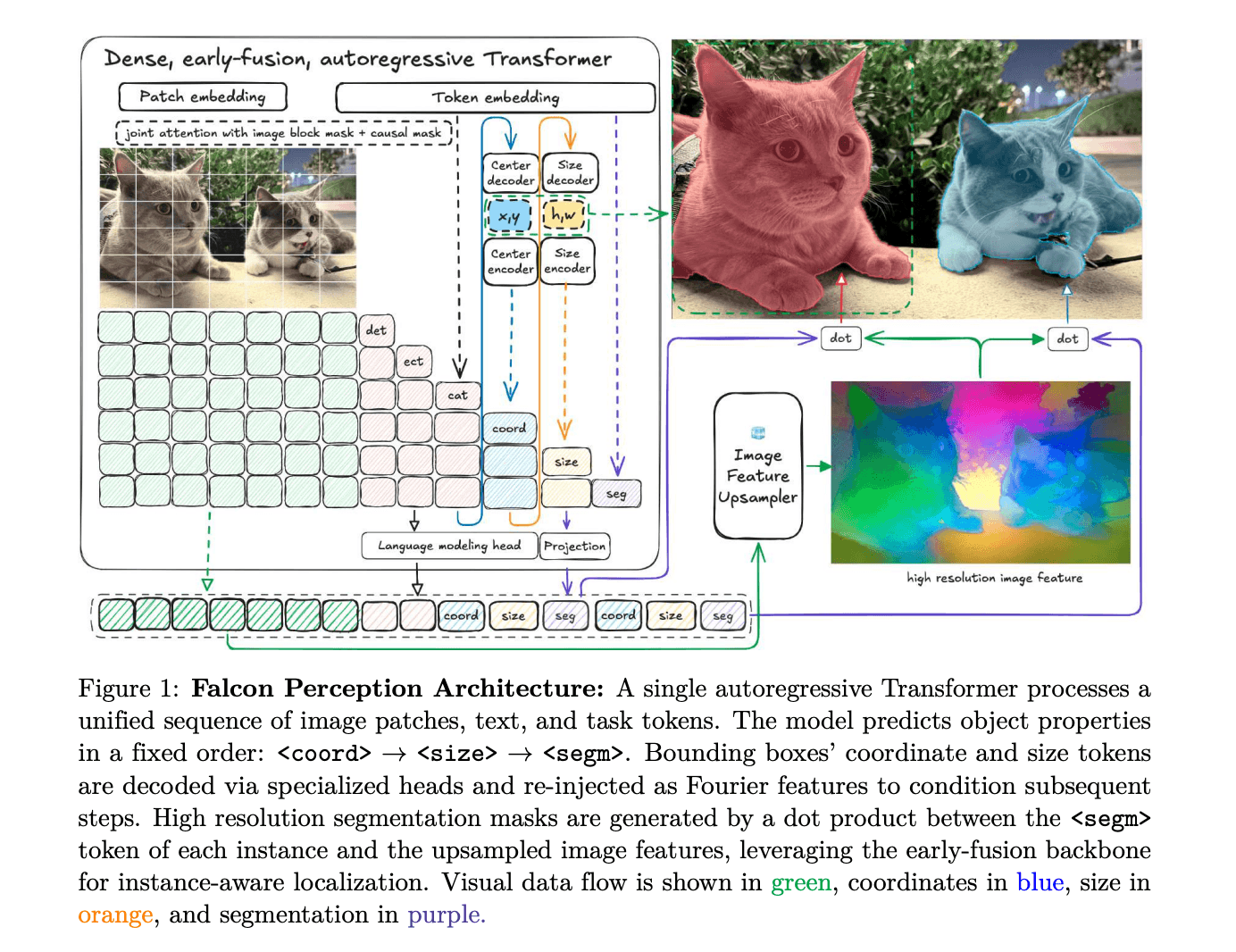
TII Releases Falcon Perception: A 0.6B-Parameter Early-Fusion Transformer for Open-Vocabulary Grounding and Segmentation from Natural Language Prompts
MarkTechPost

The house asked me a question
Dev.to

Precision Clip Selection: How AI Suggests Your In and Out Points
Dev.to


