
Theoretical Foundations of Latent Posterior Factors: Formal Guarantees for Multi-Evidence Reasoning
arXiv cs.AI / 3/18/2026
📰 NewsIdeas & Deep AnalysisModels & Research
Key Points
- LPF encodes each evidence item into a Gaussian latent posterior using a variational autoencoder, enabling principled probabilistic reasoning over heterogeneous evidence.
- It aggregates these latent posteriors either exactly via Sum-Product Network inference (LPF-SPN) or via a learned neural aggregator (LPF-Learned).
- The authors prove seven formal guarantees, including calibration preservation, Monte Carlo error decay, a non-vacuous PAC-Bayes bound, near information-theoretic efficiency, robust degradation under partial/corrupted evidence, and exact epistemic-aleatoric decomposition.
- Empirical validation on datasets up to 4,200 training examples demonstrates LPF's reliability for safety-critical applications such as healthcare, financial risk, legal analysis, and regulatory compliance.
Related Articles
Day 10: 230 Sessions of Hustle and It Comes Down to One Person Reading a Document
Dev.to

5 Dangerous Lies Behind Viral AI Coding Demos That Break in Production
Dev.to
Two bots, one confused server: what Nimbus revealed about AI agent identity
Dev.to
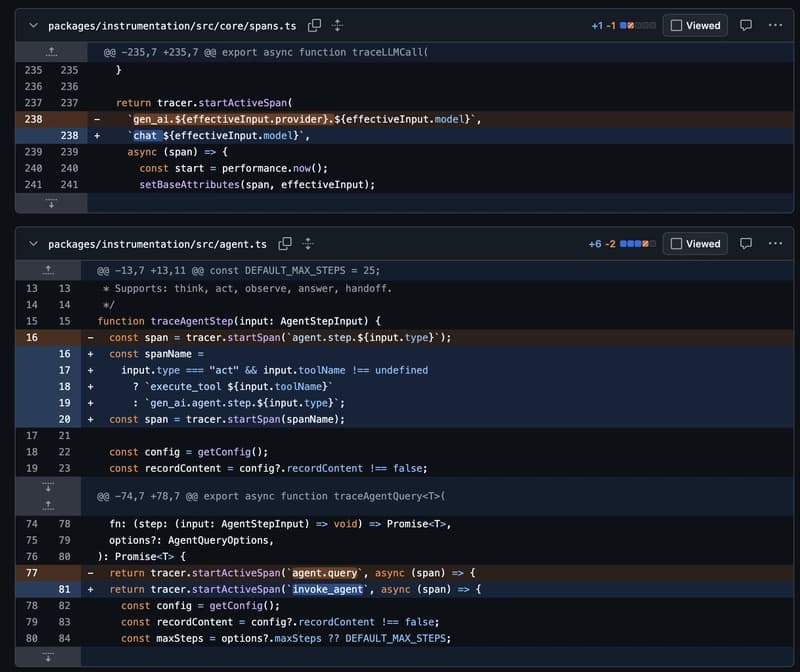
OpenTelemetry just standardized LLM tracing. Here's what it actually looks like in code.
Dev.to
PIXIU: A Large Language Model, Instruction Data and Evaluation Benchmark forFinance
Dev.to


