
Fine-Tuning Regimes Define Distinct Continual Learning Problems
arXiv cs.LG / 4/24/2026
📰 NewsSignals & Early TrendsIdeas & Deep AnalysisModels & Research
Key Points
- The paper argues that in continual learning evaluations, the fine-tuning regime (the trainable parameter subspace) should be treated as an explicit experimental variable rather than being held fixed.
- It formalizes adaptation regimes as projected optimization over fixed trainable subspaces and shows that changing the trainable depth changes the update signal balancing new-task learning and knowledge retention.
- Experiments on task-incremental continual learning with five trainable-depth regimes and four methods (online EWC, LwF, SI, GEM) across multiple datasets find that method rankings vary across regimes.
- The study finds that deeper adaptation regimes produce larger update magnitudes and higher forgetting, and strengthen the link between update size and forgetting.
- Overall, the results motivate regime-aware evaluation protocols where trainable depth is included as a factor to avoid misleading cross-method comparisons.
Related Articles
The 67th Attempt: When Your "Knowledge Management" System Becomes a Self-Fulfilling Prophecy of Excellence
Dev.to
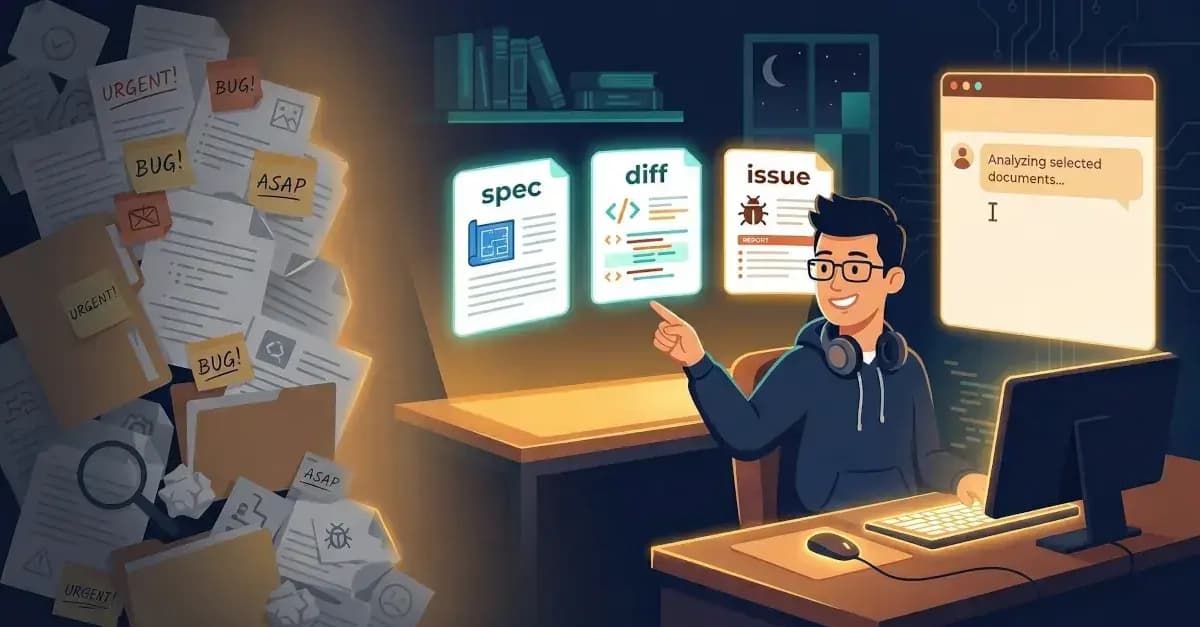
Context Engineering for Developers: A Practical Guide (2026)
Dev.to
GPT-5.5 is here. So is DeepSeek V4. And honestly, I am tired of version numbers.
Dev.to

AI Visibility Tracking Exploded in 2026: 6 Tools Every Brand Needs Now
Dev.to
I Built an AI Image Workflow with GPT Image 2.0 (+ Fixing Its Biggest Flaw)
Dev.to


