
Learning to Trade Like an Expert: Cognitive Fine-Tuning for Stable Financial Reasoning in Language Models
arXiv cs.LG / 4/21/2026
📰 NewsIdeas & Deep AnalysisModels & Research
Key Points
- The paper studies whether large language models used as autonomous trading agents can generalize their financial decision-making beyond narrow market patterns and noisy, ground-truth-scarce settings.
- It proposes a structured training and evaluation framework centered on a curated multiple-choice question dataset from classic textbooks and historical markets, verified by an AI committee and augmented with reasoning traces to reduce shortcut learning.
- The authors introduce a two-stage evaluation protocol that tests isolated MCQ performance and then measures generalization via an MCQ-based chronological trading simulation.
- Experiments across multiple market regimes show that open models trained with the framework can deliver competitive, risk-aware behavior over time and outperform open-source baselines while nearing frontier-model performance at smaller scales.
- The dataset and evaluation framework are released to enable follow-on research on training and assessing LLM-based financial reasoning.
Related Articles

Rethinking Coding Education for the AI Era
Dev.to

We Shipped an MVP With Vibe-Coding. Here's What Nobody Tells You About the Aftermath
Dev.to
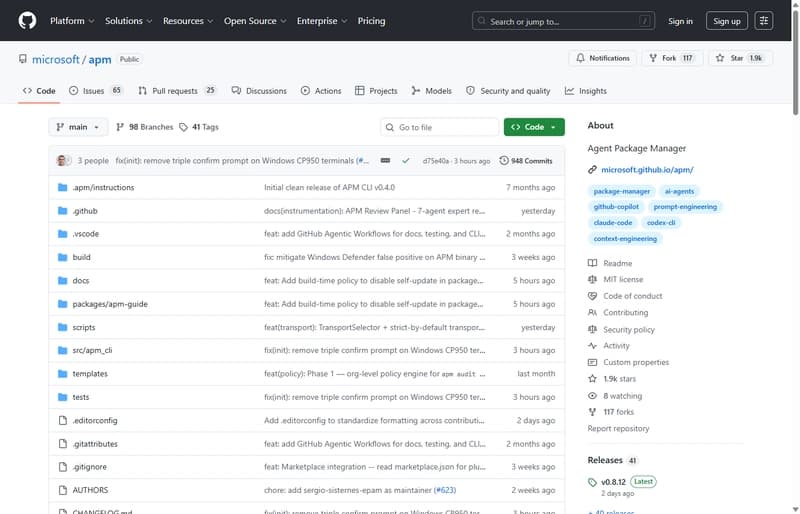
Agent Package Manager (APM): A DevOps Guide to Reproducible AI Agents
Dev.to
3 Things I Learned Benchmarking Claude, GPT-4o, and Gemini on Real Dev Work
Dev.to
Open Source Contributors Needed for Skillware & Rooms (AI/ML/Python)
Dev.to


