

AI now gobbling up power and management chips for servers
Bad news for multiple general server components as vendors switch to more lucrative gear


The chip shortage is spreading to power and management controller silicon, threatening server shipments as vendors prioritize capacity for higher-margin AI server products.
Market watcher TrendForce has downgraded its server shipment grwoth forecast for the whole of 2026 from 20 percent to 13 percent due to extended lead times for multiple general server components.
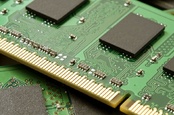
The memory chip supply crisis is familiar to Reg readers: manufacturers shifted capacity toward high-margin server DRAM and HBM for AI infrastructure, starving the market of standard DRAM and NAND and driving prices up.
The "AI effect" is now spreading to server CPUs and even hard disk drives, as manufacturing capacity gets soaked up in satisfying the requirements of the biggest cloud providers.
TrendForce says demand for general-purpose servers remains steady, however, lead times for some of these key components are stretching to nearly a year.
Now, says the analyst, lead times for power management chips (PMICs) and Baseboard Management Controllers have also lengthened considerably too. Both are vital components for servers, and - once again - AI-driven demand for datacenter products is a major part of the problem.
AI servers are typically stuffed with high performance hardware including GPU accelerators and so consume substantially more power than general-purpose systems. They are prioritized by PMIC suppliers, as they need higher value, high-current-density products.
Making matters worse, Samsung plans to shut down its 8-inch wafer fabrication plant in Korea, further squeezing PMIC capacity for general servers, TrendForce claims, with lead times expected to run between to 35 to 40 weeks. Samsung has not confirmed its closure but has also not denied reports dating back to January 2026.
PMICs and similar low-complexity chips rely on older, mature process nodes - typically 8-inch wafer fabs - but investment gravitates toward the more profitable cutting-edge processes churning out CPUs and GPUs.
This same dynamic played out during the post-Covid chip shortage, when a lack of mature process capacity left the automotive sector scrambling as car demand rebounded.
Trendforce isn't alone on its forecast: PMIC designer uPI Semi expects a shortage in power IC supplies throughout 2026, driven by surging demand from AI servers, according to reports.
- We tested Intel's new chips for cash-strapped hardcore PC users and they're impressive
- Power: The answer to and source of all your AI datacenter problems
- $10B + spent on liquid cooling this week – it's only Tuesday
- Power management IC shortage holding cars, laptops, hostage
Global 8-inch wafer capacity is also projected to shrink this year by distributor Kynix Semiconductor, which says described a "Perfect Storm" for the analog chip supply chain.
It is a similar picture for BMCs, the management chips fitted to server motherboards to monitor system health, among other functions. Due to limited foundry capacity, suppliers are prioritizing higher-margin AI-specific chip orders, Trendforce reports, again reducing the availability for general-purpose products. As result, it expects to see lead times for other customers running out to 21 to 26 weeks.
All of this is likely to hit enterprise buyers the hardest, as the biggest customers including the global cloud operators will likely have locked in their orders well in advance.
Strong demand for AI servers from AWS, Microsoft, Google et al is expected to see shipment growth in that sector of approximately 28 percent in 2026, Trendforce says. ®
More about
More about
Narrower topics
- AIOps
- ASML
- Broadcom
- Cadence Design Systems
- CHERI
- DeepSeek
- Gemini
- Google AI
- GPT-3
- GPT-4
- Hot Chips
- Large Language Model
- Loongson
- Machine Learning
- MCubed
- MediaTek
- Neural Networks
- NLP
- NXP Semiconductors
- Retrieval Augmented Generation
- Semiconductor Manufacturing International Corporation
- Semiconductor Memory
- Star Wars
- STMicroelectronics
- Tachyum
- Tensor Processing Unit
- TOPS
- United Microelectronics Corporation
Broader topics
More about
More about
More about
Narrower topics
- AIOps
- ASML
- Broadcom
- Cadence Design Systems
- CHERI
- DeepSeek
- Gemini
- Google AI
- GPT-3
- GPT-4
- Hot Chips
- Large Language Model
- Loongson
- Machine Learning
- MCubed
- MediaTek
- Neural Networks
- NLP
- NXP Semiconductors
- Retrieval Augmented Generation
- Semiconductor Manufacturing International Corporation
- Semiconductor Memory
- Star Wars
- STMicroelectronics
- Tachyum
- Tensor Processing Unit
- TOPS
- United Microelectronics Corporation


