
Beyond Ground-Truth: Leveraging Image Quality Priors for Real-World Image Restoration
arXiv cs.CV / 4/1/2026
💬 OpinionIdeas & Deep AnalysisModels & Research
Key Points
- The paper highlights a limitation of existing real-world image restoration methods that rely on ground-truth supervision, noting that “ground truth” may include inconsistent perceptual fidelity and can lead models to average quality rather than the best perceptual results.
- It proposes IQPIR, a framework that uses an Image Quality Prior extracted from pre-trained no-reference image quality assessment (NR-IQA) models to explicitly guide restoration toward perceptually optimal outputs.
- The method integrates the IQP with a learned codebook prior via a quality-conditioned Transformer (using NR-IQA scores as conditioning), a dual-branch codebook for disentangling common vs HQ-specific features, and a discrete quality optimization strategy to reduce over-optimization in continuous latent spaces.
- Experiments on real-world image restoration show IQPIR outperforms state-of-the-art approaches and can act as a generalizable, plug-and-play enhancement that improves existing restoration architectures without requiring structural changes.
- The authors state the code is publicly available, supporting adoption and further experimentation by others in the field.
Related Articles

90000 Tech Workers Got Fired This Year and Everyone Is Blaming AI but Thats Not the Whole Story
Dev.to

Microsoft’s $10 Billion Japan Bet Shows the Next AI Battleground Is National Infrastructure
Dev.to
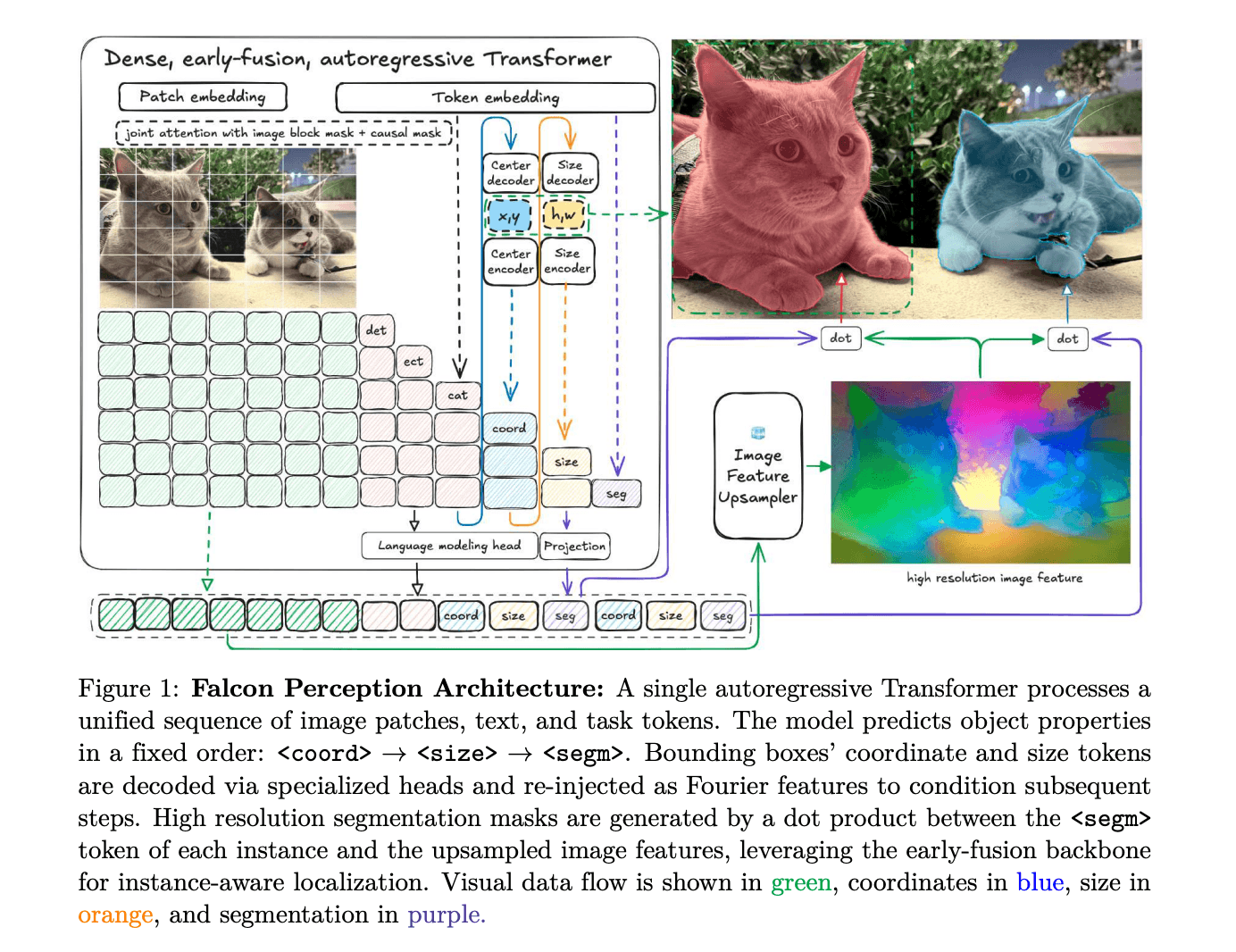
TII Releases Falcon Perception: A 0.6B-Parameter Early-Fusion Transformer for Open-Vocabulary Grounding and Segmentation from Natural Language Prompts
MarkTechPost

The house asked me a question
Dev.to

Precision Clip Selection: How AI Suggests Your In and Out Points
Dev.to


