
The Continuity Layer: Why Intelligence Needs an Architecture for What It Carries Forward
arXiv cs.AI / 4/21/2026
📰 NewsDeveloper Stack & InfrastructureSignals & Early TrendsIdeas & Deep AnalysisModels & Research
Key Points
- The paper argues that the core AI architectural challenge is not model size but the lack of a “continuity layer” that carries understanding across time, since sessions end, contexts fill, and memory APIs force re-interpretation from scratch.
- It introduces formal evaluation via the ATANT benchmark and related companion work, using a 250-story corpus to test continuity as a system property.
- The authors define continuity with seven required characteristics and distinguish it from memory and retrieval, proposing a storage primitive called Decomposed Trace Convergence Memory that achieves continuity through write-time decomposition and read-time reconstruction.
- They outline an engineering architecture and development arc spanning from external SDKs to hardware nodes and long-horizon human infrastructure, and claim current “physics” constraints make continuity especially urgent.
- Governance is treated as part of the infrastructure, with privacy embedded in “physics” rather than policy and with founder-controlled class shares tied to non-negotiable architectural commitments.
Related Articles

¿Hasta qué punto podría la IA reemplazarnos en nuestros trabajos? A veces creo que la gente exagera un poco.
Reddit r/artificial
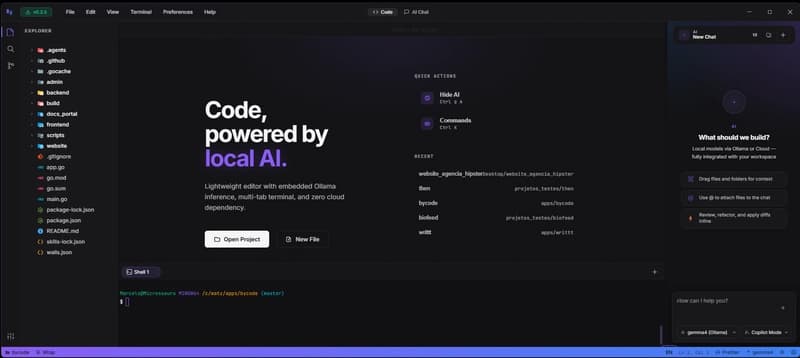
Why I Built byCode: A 100% Local, Privacy-First AI IDE
Dev.to

Magnificent irony as Meta staff unhappy about running surveillance software on work PCs
The Register
v0.21.1
Ollama Releases
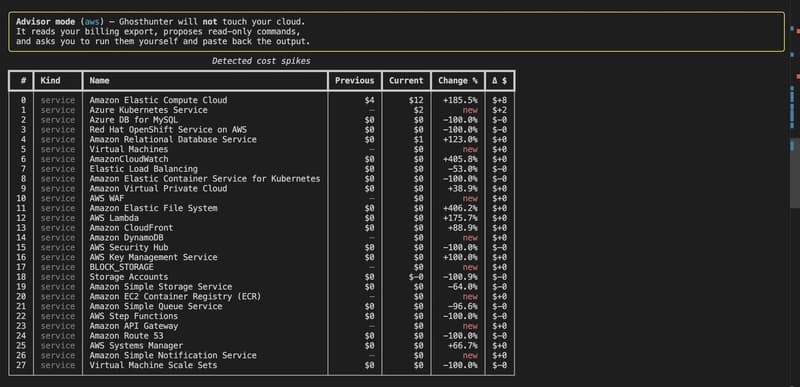
How I Built an AI Agent That Investigates Cloud Bill Spikes (Architecture Inside)
Dev.to


