
Multi-Robot Learning-Informed Task Planning Under Uncertainty
arXiv cs.RO / 3/24/2026
📰 NewsSignals & Early TrendsIdeas & Deep AnalysisModels & Research
Key Points
- The paper studies how multi-robot teams can plan and coordinate to complete complex tasks quickly when task-relevant object locations are initially unknown.
- It highlights the core challenge of long-horizon reasoning under uncertainty, where uncertainty creates many possible outcomes and makes assignment of actions to specific robots difficult.
- The authors propose a planning abstraction that combines learning-based estimation of uncertain environment aspects with model-based planning for coordinated task execution over long horizons.
- Experiments show efficient multi-stage task planning for teams of 1–3 robots in large ProcTHOR household environments, outperforming competitive baselines.
- The approach is also validated in real-world household tests using two LoCoBot mobile robots, demonstrating transfer beyond simulation.
Related Articles
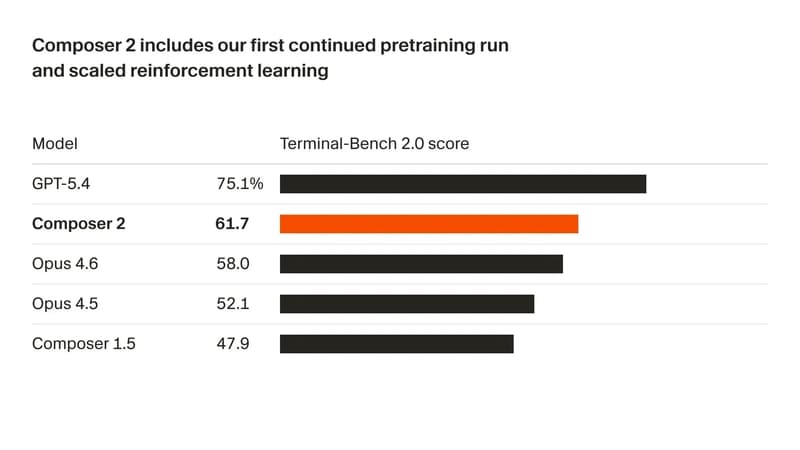
Composer 2: What is new and Compares with Claude Opus 4.6 & GPT-5.4
Dev.to
How UCP Breaks Your E-Commerce Tracking Stack: A Platform-by-Platform Analysis
Dev.to
AI Text Analyzer vs Asking Friends: Which Gives Better Perspective?
Dev.to
[D] Cathie wood claims ai productivity wave is starting, data shows 43% of ceos save 8+ hours weekly
Reddit r/MachineLearning

Microsoft hires top AI researchers from Allen Institute for AI for Suleyman's Superintelligence team
THE DECODER


