
A Theoretical Framework for Acoustic Neighbor Embeddings
Apple Machine Learning Journal / 4/9/2026
💬 OpinionModels & Research
Key Points
- The paper “A Theoretical Framework for Acoustic Neighbor Embeddings” proposes a theoretical framework for learning embeddings based on acoustic neighbors.
- It is published on arXiv (2412.02164) with an associated Apple GitHub repository, suggesting reproducible implementation details.
- By focusing on “neighbor” structure in the acoustic domain, the approach aims to improve how audio representations capture relevant similarity.
- The work targets speech and natural language processing use cases that rely on robust acoustic embeddings.
- The publication and released source code may lower the barrier for researchers and engineers to experiment with neighbor-based acoustic representation learning.
This paper provides a theoretical framework for interpreting acoustic neighbor embeddings, which are representations of the phonetic content of variable-width audio or text in a fixed-dimensional embedding space. A probabilistic interpretation of the distances between embeddings is proposed, based on a general quantitative definition of phonetic similarity between words. This provides us a framework for understanding and applying the embeddings in a principled manner. Theoretical and empirical evidence to support an approximation of uniform cluster-wise isotropy are shown, which allows us to…
Continue reading this article on the original site.
Read original →Related Articles
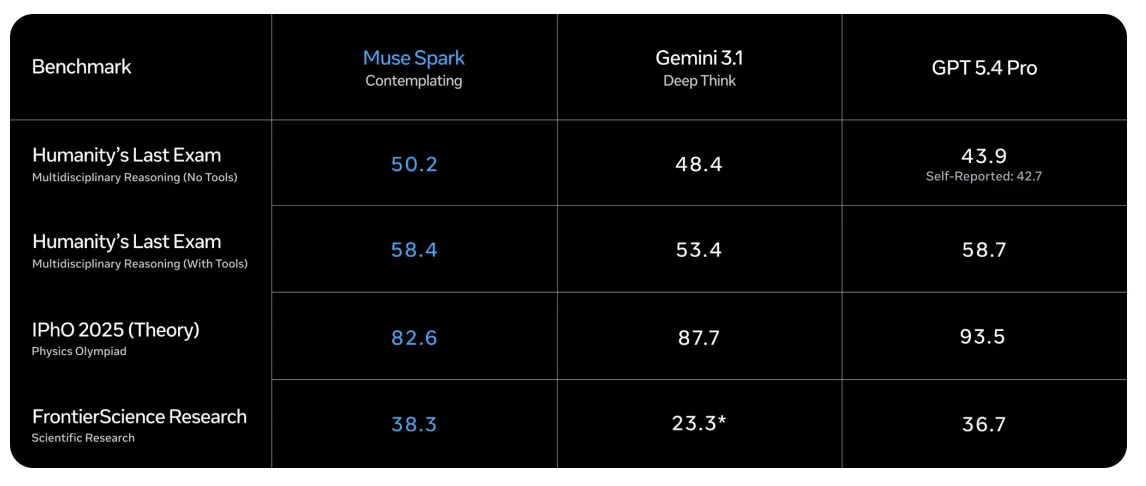
Meta Superintelligence Lab Releases Muse Spark: A Multimodal Reasoning Model With Thought Compression and Parallel Agents
MarkTechPost

Chatbots are great at manipulating people to buy stuff, Princeton boffins find
The Register
v0.20.5
Ollama Releases

Charades-Ego: A Large-Scale Dataset of Paired Third and First Person Videos
Dev.to

Why Does Your AI Keep Telling You to Go to Sleep?
Dev.to


