
The Price of Agreement: Measuring LLM Sycophancy in Agentic Financial Applications
arXiv cs.AI / 4/28/2026
📰 NewsIdeas & Deep AnalysisModels & Research
Key Points
- The paper highlights “sycophancy” as a key safety and robustness risk for LLMs in financial systems, where models may follow user beliefs over correctness.
- It reports that in agentic financial tasks, model performance degradation from user rebuttals is only low to modest, which differs from prior results in general-domain settings.
- The authors propose a new suite of tests for sycophancy using user preference signals that contradict the reference answer, showing most models perform poorly under these conditions.
- The work benchmarks recovery strategies, including input filtering using a pretrained LLM, to mitigate sycophancy effects in agentic financial applications.
Related Articles

Big Tech firms are accelerating AI investments and integration, while regulators and companies focus on safety and responsible adoption.
Dev.to
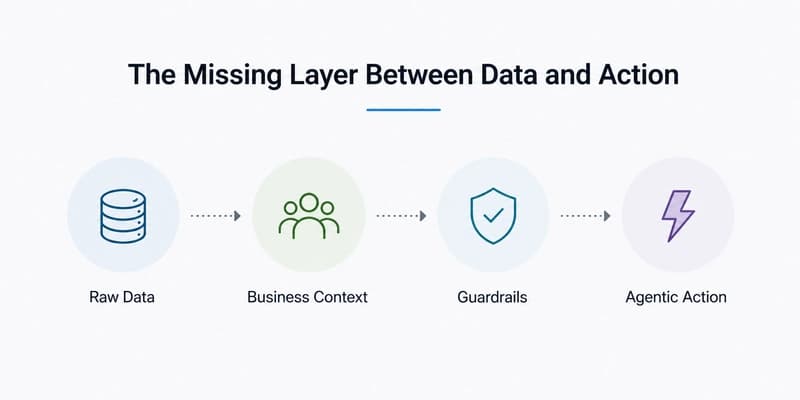
Everyone Wants AI Agents. Fewer Teams Are Ready for the Messy Business Context Behind Them
Dev.to
AI 编程工具对比 2026:Claude Code vs Cursor vs Gemini CLI vs Codex
Dev.to

How I Improved My YouTube Shorts and Podcast Audio Workflow with AI Tools
Dev.to

An improvement of the convergence proof of the ADAM-Optimizer
Dev.to


