
Regret Bounds for Competitive Resource Allocation with Endogenous Costs
arXiv cs.AI / 3/20/2026
📰 NewsIdeas & Deep AnalysisModels & Research
Key Points
- The paper studies online resource allocation among N modules over T rounds with endogenous costs that depend on the full allocation vector through an interaction matrix W.
- It compares three paradigms—uniform allocation (cost-ignorant), gated allocation (cost-estimating), and competitive allocation via multiplicative weights with interaction feedback (cost-revealing)—and proves a separation in regret: Omega(T) for uniform, O(T^{2/3}) for gated, and O(sqrt(T log N)) for competitive under adversarial variation-bounded sequences.
- It shows that the topology of W governs a computation-regret tradeoff: full interaction (|E|=O(N^2)) yields the tightest regret but the highest per-step cost, while sparse topologies (|E|=O(N)) incur at most O(sqrt(log N)) more regret and reduce per-step cost from O(N^2) to O(N); ring-like topologies such as the five-element Wuxing topology minimize the computation–regret product.
- The work provides a formal regret-theoretic justification for decentralized competitive allocation in modular architectures and frames cost endogeneity as a fundamental challenge distinct from partial observability.
Related Articles
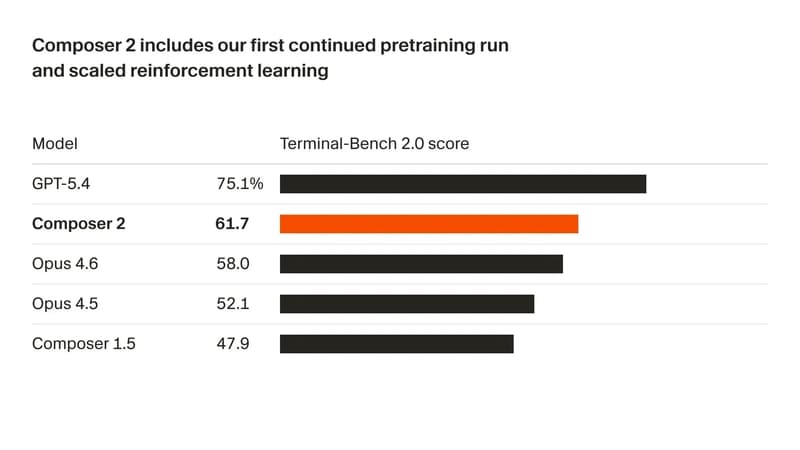
Composer 2: What is new and Compares with Claude Opus 4.6 & GPT-5.4
Dev.to
How UCP Breaks Your E-Commerce Tracking Stack: A Platform-by-Platform Analysis
Dev.to
AI Text Analyzer vs Asking Friends: Which Gives Better Perspective?
Dev.to
[D] Cathie wood claims ai productivity wave is starting, data shows 43% of ceos save 8+ hours weekly
Reddit r/MachineLearning

Microsoft hires top AI researchers from Allen Institute for AI for Suleyman's Superintelligence team
THE DECODER


