
Diffusion Crossover: Defining Evolutionary Recombination in Diffusion Models via Noise Sequence Interpolation
arXiv cs.AI / 4/17/2026
📰 NewsModels & Research
Key Points
- The paper introduces a concrete definition of “crossover” for diffusion models within Interactive Evolutionary Computation, addressing the difficulty of semantically consistent recombination in high-dimensional generative spaces.
- It proposes “Diffusion crossover,” which generates offspring by performing step-wise interpolation of noise sequences in the DDPM reverse process, using Slerp on noise associated with selected parent images.
- By restricting and controlling the interpolation time-step range, the method provides a principled way to balance exploration (diversity) against exploitation (convergence).
- Experiments (including PCA analysis and LPIPS perceptual similarity metrics) show that offspring exhibit perceptually smooth and semantically consistent transitions between parents.
- Human-in-the-loop interactive evolution experiments indicate the approach supports effective subjective, preference-driven image exploration using diffusion models as structured search spaces.
Related Articles

The Memory Wall Can't Be Killed — 3 Papers Proving Every Architecture Hits It
Dev.to

The Physics Wall in 2026: 3 Papers That Show Why Node Shrinks Won't Save Us
Dev.to
Most agent frameworks miss a key distinction: what a skill is vs how it executes
Reddit r/artificial
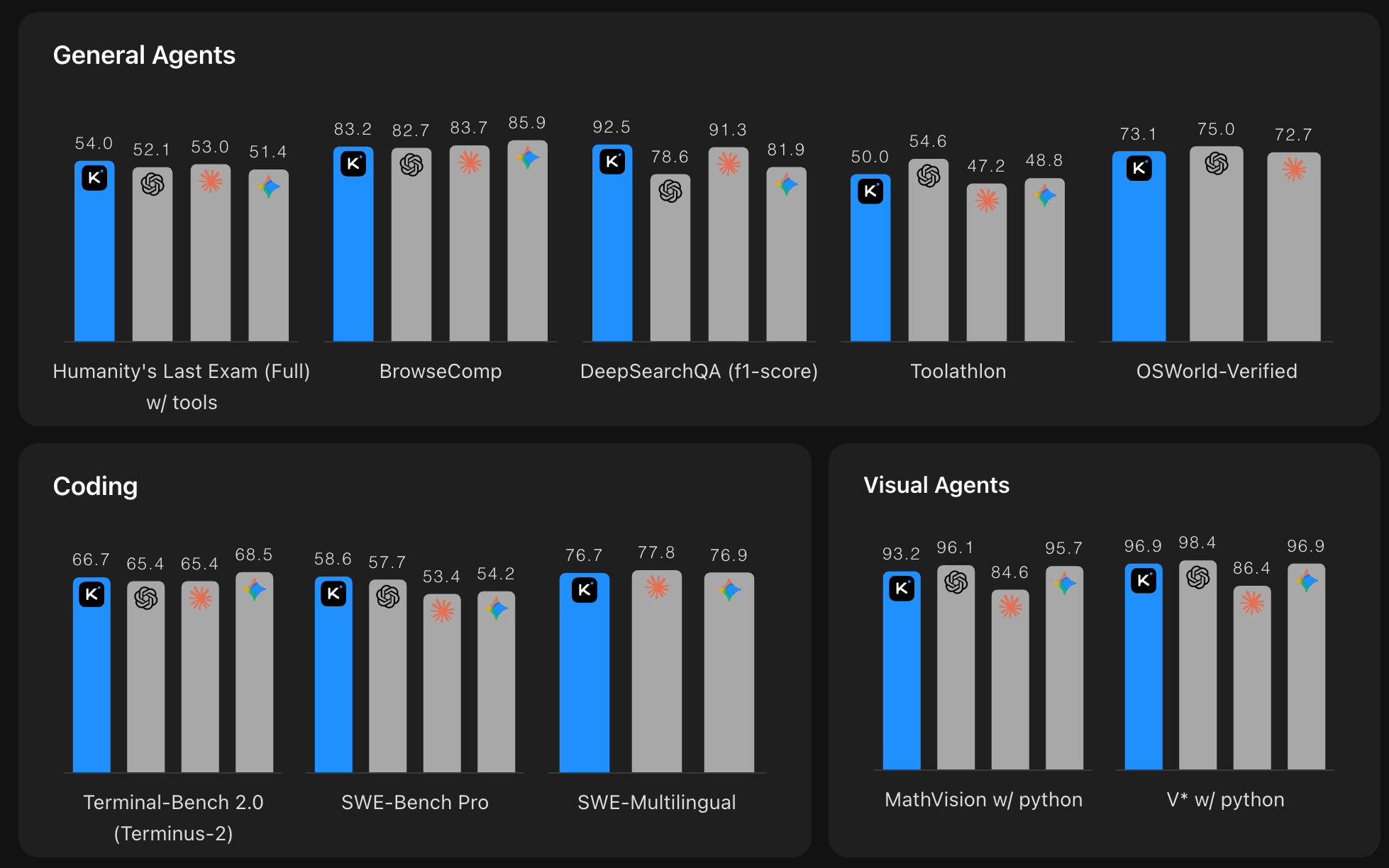
Moonshot AI Releases Kimi K2.6 with Long-Horizon Coding, Agent Swarm Scaling to 300 Sub-Agents and 4,000 Coordinated Steps
MarkTechPost

PrismML — Introducing Ternary Bonsai: Top Intelligence at 1.58 Bits
Reddit r/LocalLLaMA


