
Neural Control: Adjoint Learning Through Equilibrium Constraints
arXiv cs.RO / 5/6/2026
📰 NewsDeveloper Stack & InfrastructureIdeas & Deep AnalysisModels & Research
Key Points
- The paper addresses physical “physical AI” control problems where system configurations are determined implicitly by equilibrium constraints, leading to multi-stability and nonlinear behavior even under the same boundary actuation conditions.
- It proposes Neural Control, which computes memory- and compute-efficient, trajectory-dependent proxy gradients by differentiating equilibrium conditions using an adjoint formulation rather than backpropagating through every iteration of an equilibrium solver.
- To handle long-horizon robustness in multi-stable systems, the method integrates these sensitivity estimates into a receding-horizon MPC framework that re-anchors optimization to the actually realized equilibria and reduces basin-switching.
- Experiments in both simulation and physical robot manipulation of deformable linear objects (DLOs) show improved performance over gradient-free approaches such as SPSA and CEM.
Related Articles

Top 10 Free AI Tools for Students in 2026: The Ultimate Study Guide
Dev.to

SIFS (SIFS Is Fast Search) - local code search for coding agents
Dev.to

AI as Your Contingency Co-Pilot: Automating Wedding Day 'What-Ifs'
Dev.to

BizNode's semantic memory (Qdrant) makes your bot smarter over time — it remembers past conversations and answers...
Dev.to
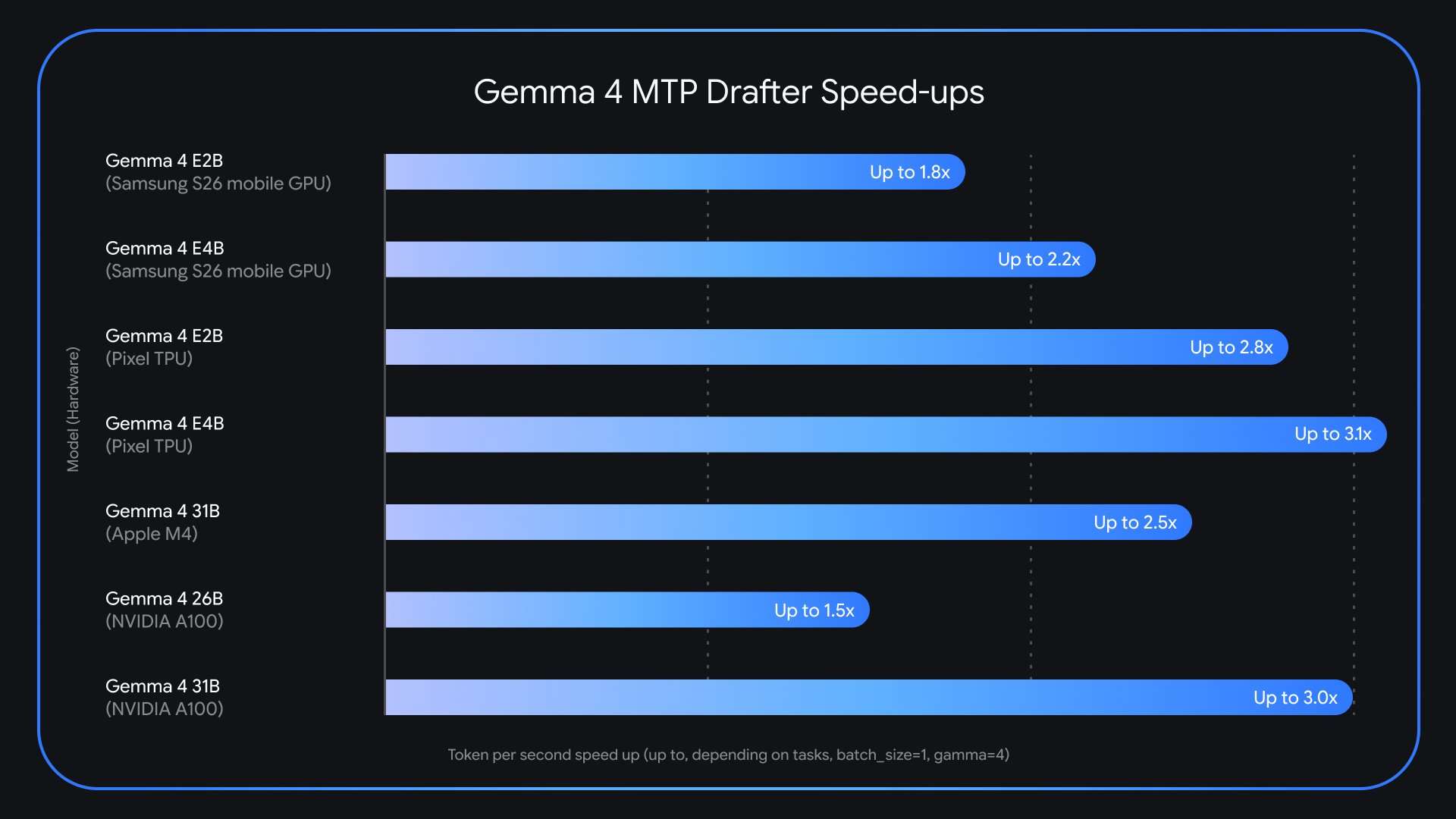
Google AI Releases Multi-Token Prediction (MTP) Drafters for Gemma 4: Delivering Up to 3x Faster Inference Without Quality Loss
MarkTechPost


