
Diffusion Masked Pretraining for Dynamic Point Cloud
arXiv cs.CV / 5/6/2026
📰 NewsSignals & Early TrendsModels & Research
Key Points
- The paper argues that dynamic point cloud pretraining is still largely based on masked reconstruction objectives, but existing approaches suffer from spatio-temporal positional leakage and overly deterministic motion supervision.
- It proposes Diffusion Masked Pretraining (DiMP), which integrates diffusion modeling into both positional estimation and motion learning within a unified self-supervised framework.
- DiMP applies forward diffusion noise only to masked tube centers and then predicts clean centers from visible spatio-temporal context, removing positional leakage while keeping visible coordinates as reliable temporal anchors.
- For motion learning, DiMP replaces deterministic inter-frame displacement targets with a DDPM noise-prediction objective, encouraging the encoder to model the full conditional distribution of plausible motions rather than collapsing to conditional means.
- Experiments show consistent downstream improvements over the backbone alone, including absolute gains of 11.21% for offline action segmentation and 13.65% for causally constrained online inference, and the authors release code on GitHub.
Related Articles

Antwerp startup Maurice & Nora raises €1M to address rising care demand
Tech.eu

Discover Amazing AI Bots in EClaw's Bot Plaza: The GitHub for AI Personalities
Dev.to
Amd radeon ai pro r9700 32GB VS 2x RTX 5060TI 16GB for local setup?
Reddit r/LocalLLaMA
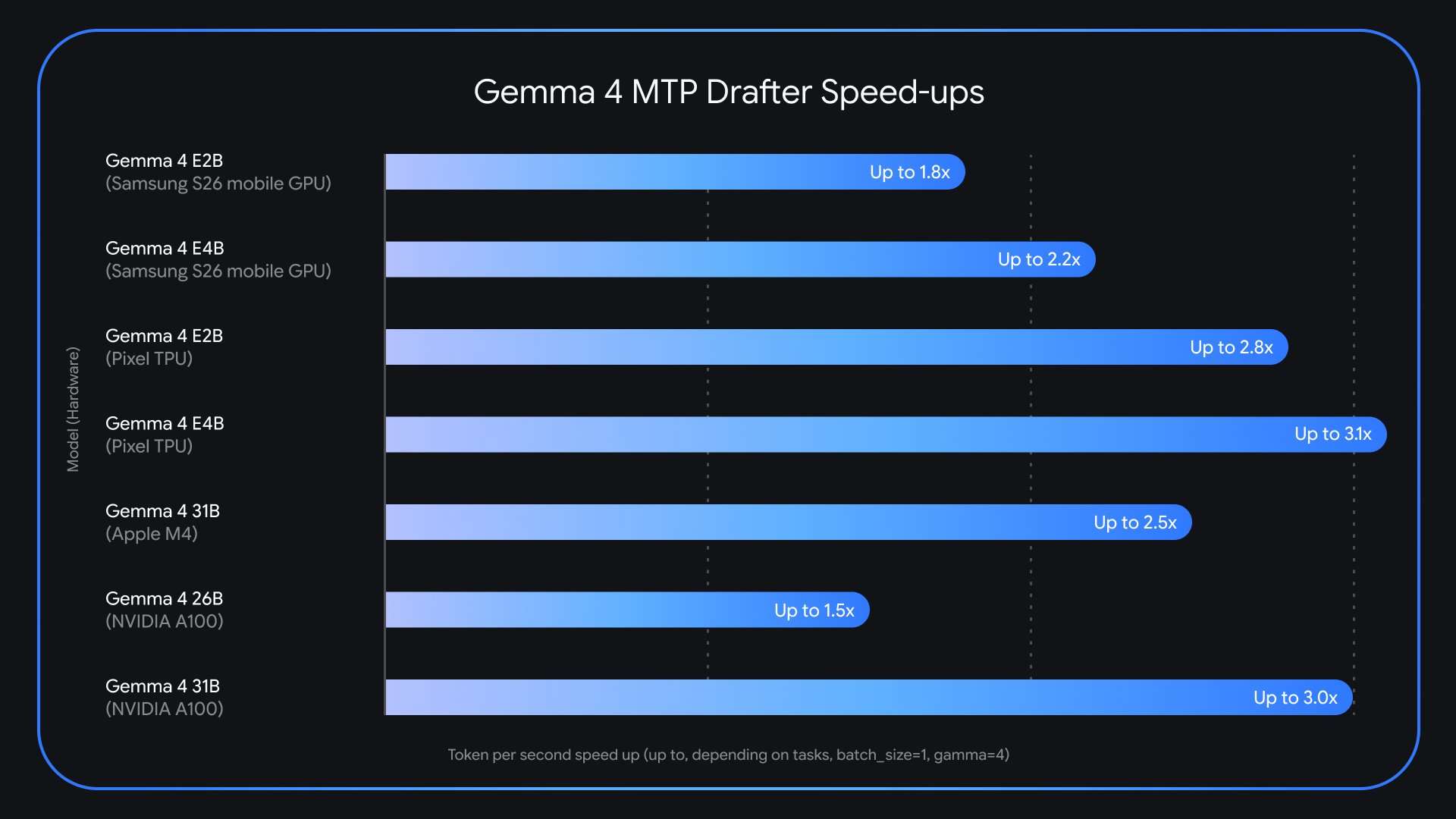
Google AI Releases Multi-Token Prediction (MTP) Drafters for Gemma 4: Delivering Up to 3x Faster Inference Without Quality Loss
MarkTechPost

Renaissance Philanthropy reshapes science funding with a new model for innovation
Tech.eu


