
On the Use of Evolutionary Optimization for the Dynamic Chance Constrained Open-Pit Mine Scheduling Problem
arXiv cs.AI / 4/16/2026
💬 OpinionIdeas & Deep AnalysisModels & Research
Key Points
- The paper addresses dynamic chance-constrained open-pit mine scheduling under uncertainty, where block economic values are stochastic and capacities change over time.
- It formulates the problem as a bi-objective evolutionary optimization task that maximizes expected discounted profit while minimizing the standard deviation (risk).
- To handle dynamic changes, the authors introduce a diversity-based change-response mechanism that repairs part of an infeasible population and adds new feasible solutions upon detecting changes.
- The method is benchmarked on six mining instances across multiple uncertainty levels and change frequencies, and it outperforms a baseline re-evaluation-based strategy.
- The proposed approach is evaluated using four multi-objective evolutionary algorithms, indicating robustness of the change-response mechanism across optimization variants.
Related Articles
The AI Hype Cycle Is Lying to You About What to Learn
Dev.to
Big Tech firms are accelerating AI investments and integration, while regulators and companies focus on safety and responsible adoption.
Dev.to

Inside NVIDIA’s $2B Marvell Deal: What NVLink Fusion Means for AI Ethernet Fabrics
Dev.to
Automating Your Literature Review: From PDFs to Data with AI
Dev.to
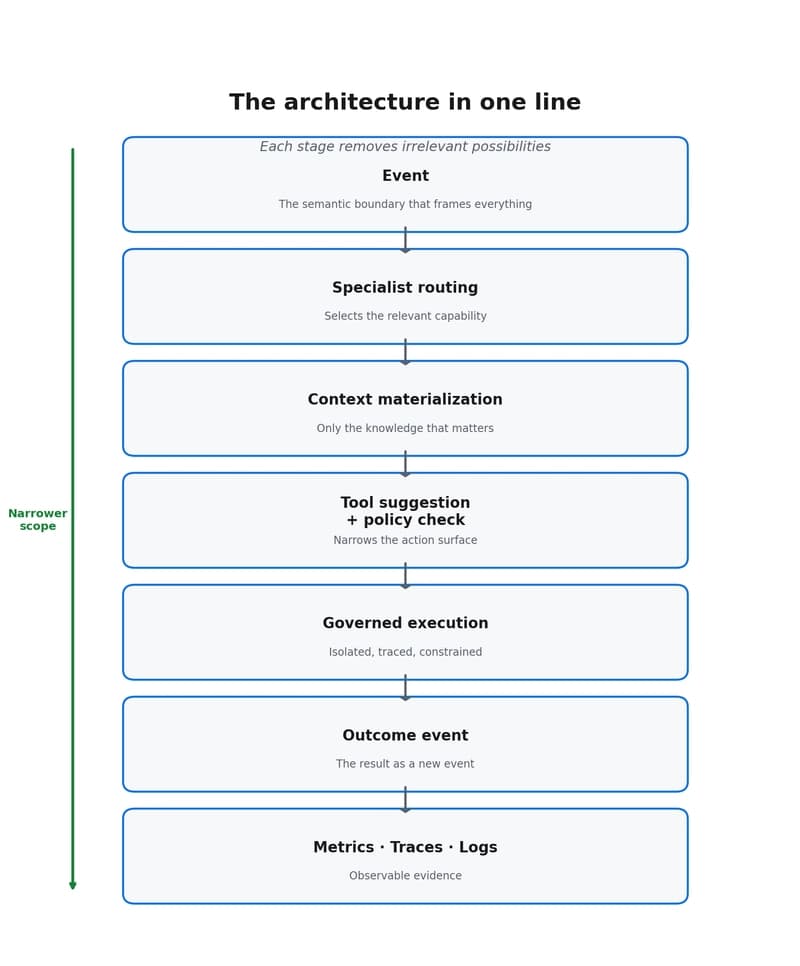
Why event-driven agents reduce scope, cost, and decision dispersion
Dev.to


