
Toward Safe Autonomous Robotic Endovascular Interventions using World Models
arXiv cs.RO / 4/23/2026
📰 NewsDeveloper Stack & InfrastructureModels & Research
Key Points
- The paper proposes a world-model-based reinforcement learning framework for autonomous endovascular navigation for mechanical thrombectomy, aiming to improve robustness to varied vascular anatomies and long navigation horizons.
- It evaluates a TD-MPC2 agent on multiple simulation tasks across hold-out patient-specific vasculatures and benchmarks it against the Soft Actor-Critic (SAC) baseline.
- In simulation, TD-MPC2 achieves a higher mean success rate than SAC (58% vs. 36%, p < 0.001) while keeping tip contact forces (0.15 N) well below a 1.5 N vessel rupture threshold.
- In vitro tests with patient-specific vascular phantoms under fluoroscopic guidance show comparable success rates between TD-MPC2 (68%) and SAC (60%), but TD-MPC2 produces superior path ratios (p = 0.017) with longer procedure times (p < 0.001).
- The authors claim this is the first demonstration of autonomous MT navigation validated across both hold-out simulation data and fluoroscopy-guided in vitro experiments, supporting the potential for safer, more generalizable AI-assisted interventions.
Related Articles

Trajectory Forecasts in Unknown Environments Conditioned on Grid-Based Plans
Dev.to
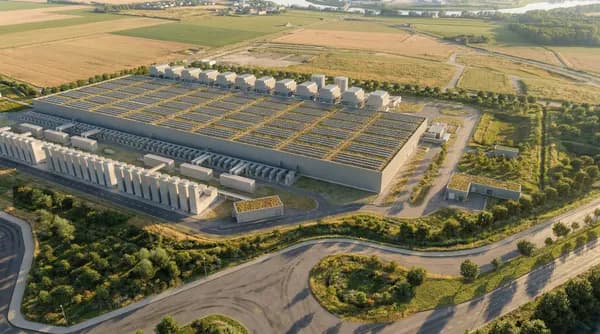
Elevating Austria: Google invests in its first data center in the Alps.
Google Blog
OpenAI Just Named It Workspace Agents. We Open-Sourced Our Lark Version Six Months Ago
Dev.to

GPT Image 2 Subject-Lock Editing: A Practical Guide to input_fidelity
Dev.to
AI Tutor That Works Offline — Study Anywhere with EaseLearn AI
Dev.to


