
Less is More: Adapting Text Embeddings for Low-Resource Languages with Small Scale Noisy Synthetic Data
arXiv cs.CL / 3/25/2026
💬 OpinionSignals & Early TrendsIdeas & Deep AnalysisModels & Research
Key Points
- The paper argues that low-resource language (LRL) text embedding improvements do not necessarily require massive or pristine human-verified translation datasets.
- Using Armenian as a case study, it proposes a low-cost adaptation approach that fine-tunes a multilingual encoder (mE5) on only 10,000 noisy synthetic pairs generated from English Reddit title-body translations using open-weights models.
- Experiments show a “Less is More” effect: fine-tuning on the small noisy set yields 11–12% average benchmark gains and 20%+ relative retrieval improvements, comparable to models trained on about 1 million examples.
- Increasing synthetic data scale, upgrading translation quality with state-of-the-art LLMs, or diversifying domains did not produce meaningful gains beyond the minimal baseline, suggesting early saturation in semantic alignment.
- The authors validate results on another script-unique LRL, release the model/data/benchmark for reproducibility, and position the findings as enabling high-performance embeddings for resource-constrained communities.
Related Articles

Lemonade 10.0.1 improves setup process for using AMD Ryzen AI NPUs on Linux
Reddit r/artificial
The 2026 Developer Showdown: Claude Code vs. Google Antigravity
Dev.to

Google March 2026 Spam Update: SEO Impact and What to Do Now | MKDM
Dev.to
CRM Development That Drives Growth
Dev.to
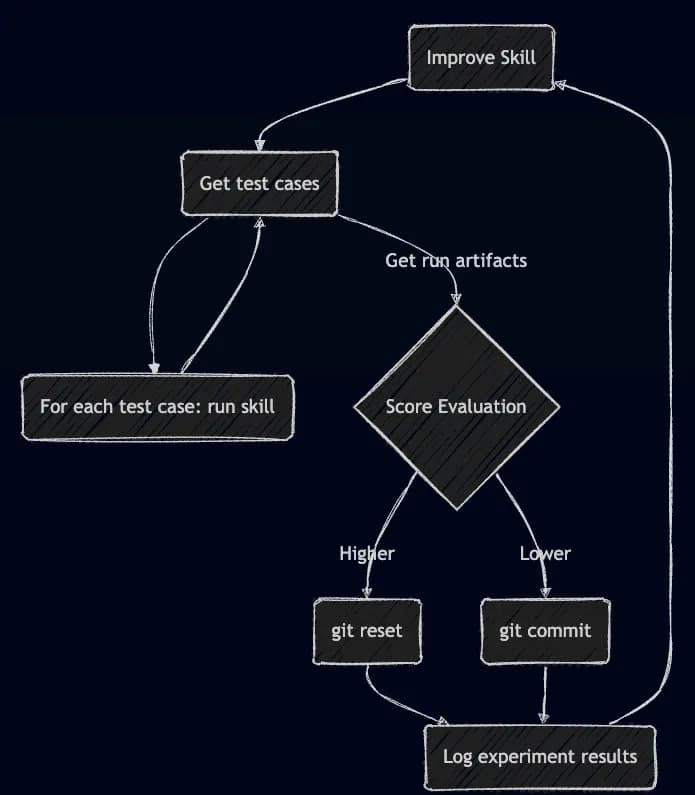
Karpathy's Autoresearch: Improving Agentic Coding Skills
Dev.to


