
A Delta-Aware Orchestration Framework for Scalable Multi-Agent Edge Computing
arXiv cs.LG / 4/23/2026
📰 NewsDeveloper Stack & InfrastructureSignals & Early TrendsModels & Research
Key Points
- The paper identifies a “Synergistic Collapse” in large-scale multi-agent edge deployments where scaling beyond 100 agents triggers superlinear performance degradation that individual optimizations can’t stop.
- Using a Smart City case with 150 cameras and MADDPG, it reports Deadline Satisfaction falling from 78% to 34%, leading to roughly $180,000 in annual cost overruns.
- It proposes DAOEF (Delta-Aware Orchestration for Edge Federations), which combines Differential Neural Caching, Criticality-Based Action Space Pruning, and Learned Hardware Affinity Matching to address exponential action-space growth, redundant computation, and task-agnostic scheduling together.
- Experiments show that each component is necessary but not sufficient alone, while the full DAOEF framework delivers a multiplicative improvement (1.45x) and significant latency reductions (62% in a 200-agent cloud deployment, with sub-linear growth up to 250 agents).
- The authors also validate the approach on both datasets (100–250 agents) and a 20-device physical testbed, demonstrating robustness beyond purely simulated settings.
Related Articles

Big Tech firms are accelerating AI investments and integration, while regulators and companies focus on safety and responsible adoption.
Dev.to

Trajectory Forecasts in Unknown Environments Conditioned on Grid-Based Plans
Dev.to
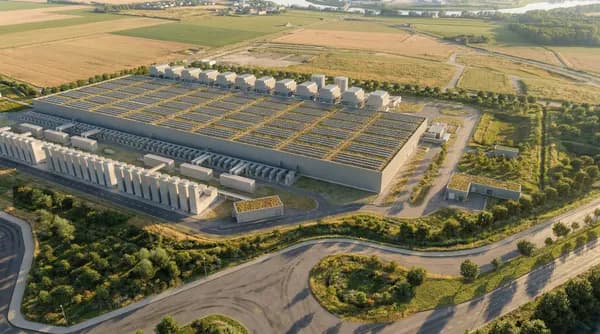
Elevating Austria: Google invests in its first data center in the Alps.
Google Blog
10 AI Tools Every Developer Should Try in 2026
Dev.to
OpenAI Just Named It Workspace Agents. We Open-Sourced Our Lark Version Six Months Ago
Dev.to


