
Population-Aware Imitation Learning in Mean-field Games with Common Noise
arXiv cs.LG / 5/6/2026
📰 NewsIdeas & Deep AnalysisModels & Research
Key Points
- The paper studies imitation learning in Mean Field Games (MFGs) where agents face common noise and the population distribution evolves stochastically.
- It argues that this stochasticity requires population-aware policies that react to aggregate (population-level) shocks.
- The authors define two learning objectives—(1) recovering a Nash equilibrium and (2) matching/exceeding an expert population—and evaluate two imitation surrogates: Behavioral Cloning (BC) and adversarial (ADV) divergence.
- They provide finite-sample error bounds showing that minimizing these imitation proxies controls both policy exploitability and performance gaps versus the expert.
- A numerical method combining generalized Fictitious Play with deep learning is proposed, and experiments across three environments show that population-unaware policies cannot capture equilibrium dynamics under common noise.
Related Articles

Top 10 Free AI Tools for Students in 2026: The Ultimate Study Guide
Dev.to
AI as Your Contingency Co-Pilot: Automating Wedding Day 'What-Ifs'
Dev.to
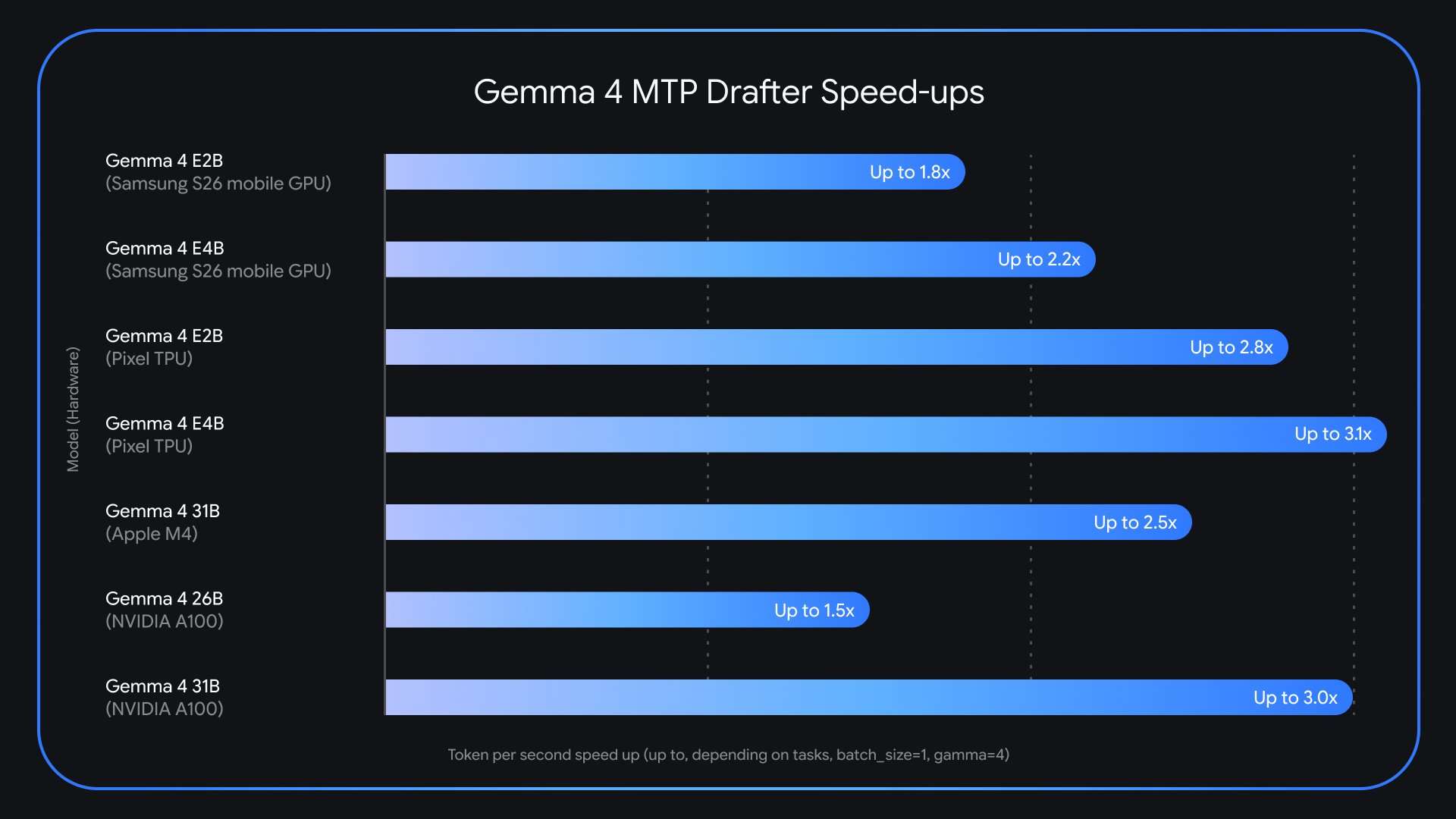
Google AI Releases Multi-Token Prediction (MTP) Drafters for Gemma 4: Delivering Up to 3x Faster Inference Without Quality Loss
MarkTechPost
When Claude Hallucinates in Court: The Latham & Watkins Incident and What It Means for Attorney Liability
MarkTechPost
Solidity LM surpasses Opus
Reddit r/LocalLLaMA


