
Operationalising the Right to be Forgotten in LLMs: A Lightweight Sequential Unlearning Framework for Privacy-Aligned Deployment in Politically Sensitive Environments
arXiv cs.AI / 4/15/2026
💬 OpinionIdeas & Deep AnalysisModels & Research
Key Points
- The paper addresses how to operationalise the GDPR Right to be Forgotten for LLMs deployed in politically sensitive settings where personal or confidential memorisation creates compliance risk.
- It proposes a lightweight sequential unlearning framework that decouples retention and suppression by using positive fine-tuning to stabilise benign capabilities before applying layer-restricted negative fine-tuning to suppress specified sensitive patterns.
- Experiments on the SemEval-2025 LLM Unlearning benchmark show strong behavioural suppression while keeping factual accuracy and fluency largely intact.
- The results indicate that model capacity affects robustness, with GPT-2 performing more reliably than DistilGPT-2 during privacy-aligned unlearning.
Related Articles
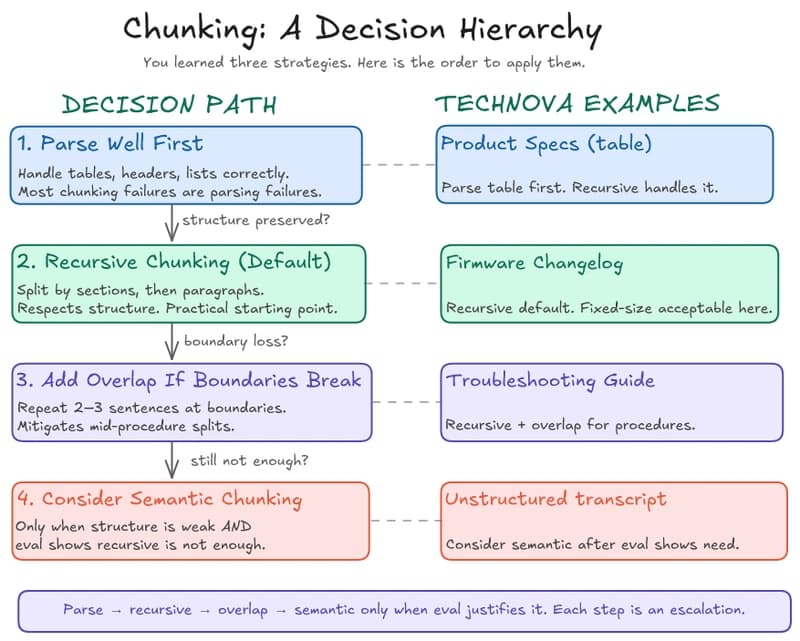
RAG in Practice — Part 4: Chunking, Retrieval, and the Decisions That Break RAG
Dev.to
Why dynamically routing multi-timescale advantages in PPO causes policy collapse (and a simple decoupled fix) [R]
Reddit r/MachineLearning

How AI Interview Assistants Are Changing Job Preparation in 2026
Dev.to

Consciousness in Artificial Intelligence: Insights from the Science ofConsciousness
Dev.to

NEW PROMPT INJECTION
Dev.to


